
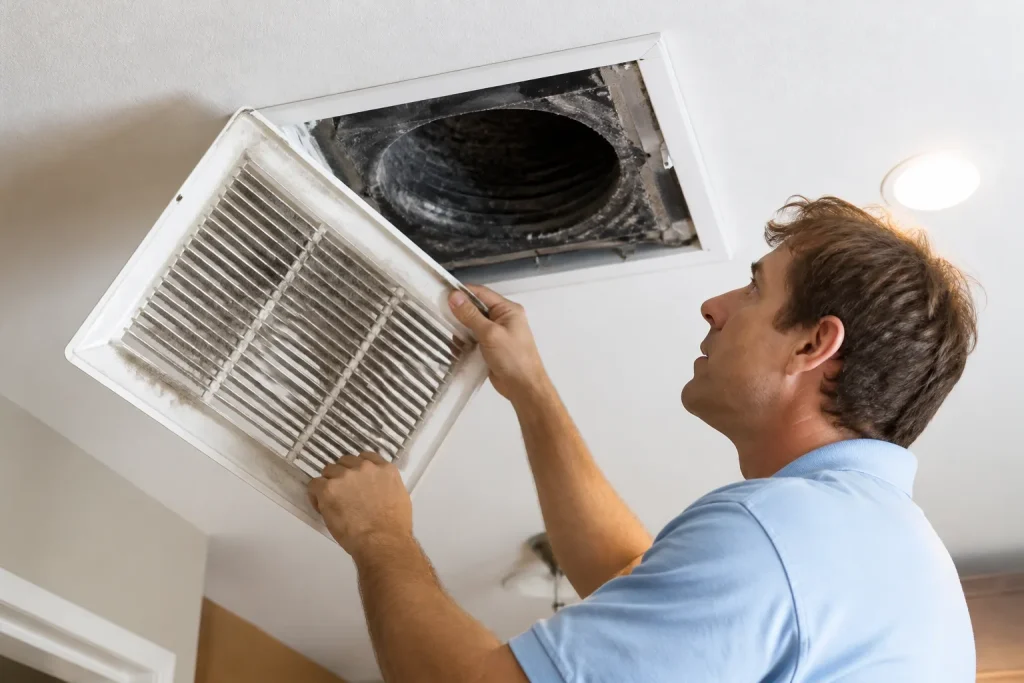
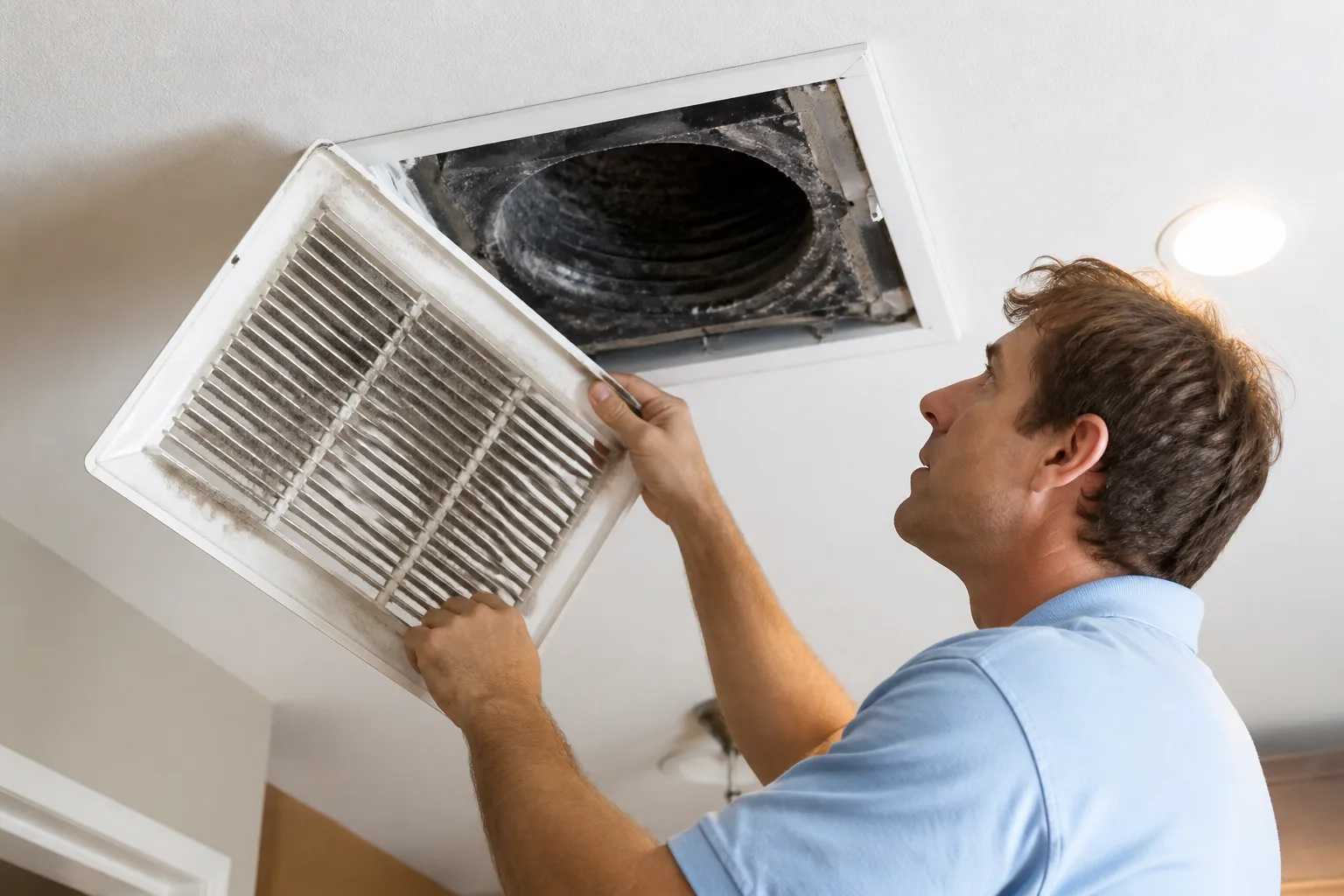
Top Signs You Need Air Duct Cleaning Service – Don’t Ignore These
Uneven room temperatures usually aren’t a thermostat problem or an insulation problem. In many Highlands Ranch homes, they’re a duct restriction problem, where accumulated debris narrows the effective airflow cross-section and starves the rooms farthest from the furnace. The signs of dirty ducts aren’t cosmetic. Each one is a system-behavior signal, which means you can read what your HVAC is doing before anything visible shows up. If you’d rather not climb into the crawlspace yourself, call (844) 443-4896.
Your Energy Bills Creep Up Before You See Any Dust
This one surprises homeowners. Bills rise before dust becomes visible, and there’s a mechanical reason. When the effective cross-section of a duct run shrinks, the blower motor has to spin harder and longer to move the same cubic feet per minute of air. That extra electrical draw shows up on your utility statement weeks before a single dust mote appears on a register. In our experience around Highlands Ranch, this is the earliest and most overlooked signal of duct restriction.
Watch for these patterns in the billing cycle:
- A gradual increase over several seasons rather than a sudden spike
- Higher bills in months when you’d expect mild usage
- Longer run times, where the system cycles but never quite satisfies the thermostat
- Rooms that stay cold no matter what you set the dial to
We’ve seen homeowners replace a thermostat or rebalance vents chasing a problem that traced back to restricted ductwork. If your bills have drifted up quietly over a few years, that’s worth investigating before you spend on hardware. Our technicians have up to 15 years of experience reading exactly this pattern.
What Different Smells Are Actually Telling You
A smell has a source, and the type of odor narrows down what’s happening inside the system. This is one place where generalizing does a disservice. The smell taxonomy matters:
- Musty or earthy: biological growth, usually where condensation collects or humidity stays elevated. The duct interior becomes a damp surface.
- Burning during the first heat of the season: dust combusting on the heat exchanger as it warms up. A faint smell on startup that fades is normal; a persistent burning odor is not.
- Chemical or new-paint smell after renovation: VOCs pulled into return air and settling in ductwork. A renovation is one of the most common triggers for this.
If a smell persists past the first heat cycle or comes back every time the system runs, that’s a duct contamination signal, not a filter signal. In Highlands Ranch, where renovation activity and seasonal swings both drive these issues, smell is often the first thing a homeowner notices. Filtration products from Honeywell and Aprilaire can help on the preventive side, but they don’t clean what’s already settled.
Is It Dirty Ducts or Just a Clogged Filter?
Both produce overlapping symptoms, and homeowners often fix the wrong one. A clogged filter restricts airflow at the return, and the fix is a filter swap. Dirty ducts hold debris inside the runs themselves, and swapping filters won’t touch it. Distinguishing the two saves money and frustration.
- Pull the filter. If it’s heavily loaded and the system improves right after a fresh one, you may have caught a filter problem alone.
- Check whether a new filter restores airflow for more than a few weeks. If symptoms return fast, debris is likely deeper in the system.
- Look at the blower compartment. Heavy dust there points to contamination passing the filter.
- Watch for the same symptoms in multiple rooms. A filter affects the whole house; a single restricted branch affects one area.
A filter is cheap and worth ruling out first. But if a fresh filter doesn’t hold the improvement, it’s time to look inside the ducts themselves with a camera or a professional inspection. If you’d rather have that answered directly, a professional-grade review with Rotobrush or Nikro equipment will show you what’s actually in there.
The White Cloth Test and What Debris Color Means
Here’s a simple check you can run in a couple of minutes. Tape a clean white cloth or paper towel over a supply register, let the system run, then look at what collects. The color tells you about contamination type:
- Gray-brown: ordinary household dust and lint, the baseline for any home
- Black or sooty: combustion byproducts or heavy soot, worth a closer look
- Greenish or dark, with a smell: possible biological growth; combine with the musty smell check
- Orange or reddish: rust particles, signaling moisture somewhere in the system
Run it at more than one register. If the cloth stays fairly clean on some and loads up on others, that points to a restricted or leaking branch rather than whole-house contamination. For filtration hardware and purifying products, Guardsman and Aprilaire are solid names to understand, though the cloth test tells you what’s there, not how to fix it. That’s a conversation about the full system.
Temperature Swings and the Airflow-Chain Picture
That uneven room temperature from the opening is often a duct restriction more than an HVAC or insulation failure. When debris narrows a branch, the rooms at the end of the run get starved first. The thermostat reads fine at the sensor while the back bedroom stays stubbornly cold. This is one of the most common complaints we hear in Highlands Ranch homes with longer duct runs.
It helps to see the airflow chain as one connected system: registers, duct runs, the HVAC unit, the seals connecting them, and the air quality itself. Cleaning one link while ignoring another won’t restore balance. A leaking duct undoes the value of a cleaning, which is why repair and sealing matter as much as the cleaning itself. When we look at a system, we look at all of it, not just the ducts. That full-picture view is what actually fixes temperature swings.
Why Highlands Ranch Homes Trigger This More Often
Local conditions pull contaminants into the system faster than the national average would suggest. Three triggers stand out here:
- Wildfire smoke seasons: fine particulate that a standard filter was never designed to stop gets pulled into return air and settles in the ductwork.
- High winds carrying construction particulates: active development in the area means windblown dust and building debris that finds its way indoors.
- Spring pollen saturation: the pollen load gets drawn straight into returns during the season, coating duct interiors.
These aren’t vague cautions. A Highlands Ranch home near an active build, or one that’s sat through a heavy smoke season, loads up its ductwork faster than a comparable home elsewhere. If your house has been through a renovation, a smoke event, or a windy construction season, that’s a reason to check. Dryer vent buildup is a related safety concern that many duct cleaners skip, and it’s worth a look while you’re thinking about the system. Our dryer vent cleaning addresses it as a standalone service.
When to Call a Pro
You can handle filters and quick visual checks yourself. But when symptoms point to contamination inside the ducts, or when you want a clear answer about what’s actually in the system, that’s when a professional inspection pays off. Here’s the practical line: if you’ve swapped filters, the smell persists, bills have crept up, and rooms won’t balance, a thorough look with real equipment will tell you more than guesswork. Our air duct cleaning and HVAC cleaning cover the whole system, so nothing gets left half-done.
Related services in Highlands Ranch: if your symptoms include a dusty home and a struggling system, start with a full-system review. Air quality you can verify, not just assume, comes from checking the whole airflow chain in one visit.
The Bottom Line
Read the signs as system signals, not cosmetic complaints. Rising bills, musty smells, uneven rooms, and debris on the white cloth test all point to the same mechanical story: restricted airflow somewhere in the chain. Ruling out a clogged filter is always step one. If a fresh filter doesn’t hold the improvement, it’s time to look inside the ducts.
We use professional-grade equipment built for this work, including Rotobrush and Nikro for duct cleaning and Abatement Technologies for containment and filtration during service, so the job is done to a contractor standard, not a shop-vac workaround. If you’re in Highlands Ranch and need help, Air Duct Cleaning Highlands Ranch offers free estimates. Call (844) 443-4896. We answer 24/7. Fast dispatch from 7am to 7pm, Sunday through Friday.
If you’d like the bigger picture of our Air Duct Cleaning Highlands Ranch approach, it’s all here. And if uneven airflow is pushing you to rethink how your whole home circulates, understanding the HVAC cleaning side of the system is worth a few minutes too.
Frequently Asked Questions
Most homes benefit from a look every few years, but the honest answer depends on conditions rather than a fixed calendar. A Highlands Ranch home that’s been through a heavy smoke season, a renovation, or a windy construction stretch may need it sooner. The signs on this page matter more than a schedule.
Cheap quotes often skip real equipment and containment, cleaning the easy-to-reach vents and calling it done. Professional work uses purpose-built systems and containment, so the job actually reaches the duct interiors. Ask what equipment is used before you compare prices.
Ask for before-and-after photos of your own system, and watch that containment is used during the job. A service that can’t show you what it did is a service worth questioning.
Yes. Restricted airflow forces the blower motor to work harder, which raises electrical draw before any dust is visible. If bills have drifted up and rooms won’t balance, restricted ducts are worth checking.
Duct cleaning focuses on the duct runs and registers. HVAC cleaning covers the unit itself, including the components airflow passes through. A full system review often looks at both, plus the seals between them.
A faint smell that fades during the first heat cycle is usually dust combusting on the heat exchanger. A persistent burning smell or one that returns every run is not normal and deserves inspection. Call (844) 443-4896 for a free estimate, and we’ll help you sort out what you’re seeing.
Written by the team at Air Duct Cleaning Highlands Ranch.
Need Air Duct Cleaning Help?
Call Air Duct Cleaning Highlands Ranch - the local pro we connect you with is licensed and insured, with free written estimates in Highlands Ranch.
(844) 443-4896