
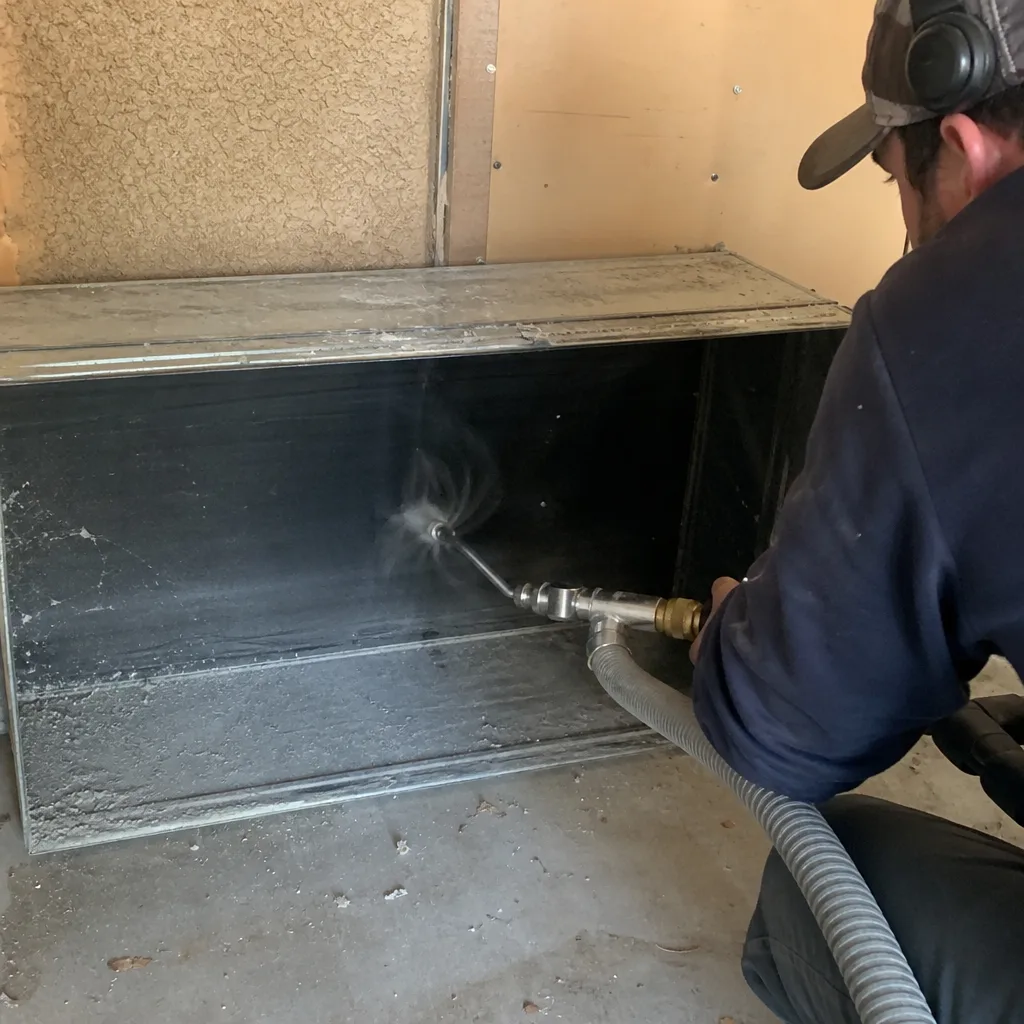
Last updated November 23, 2026
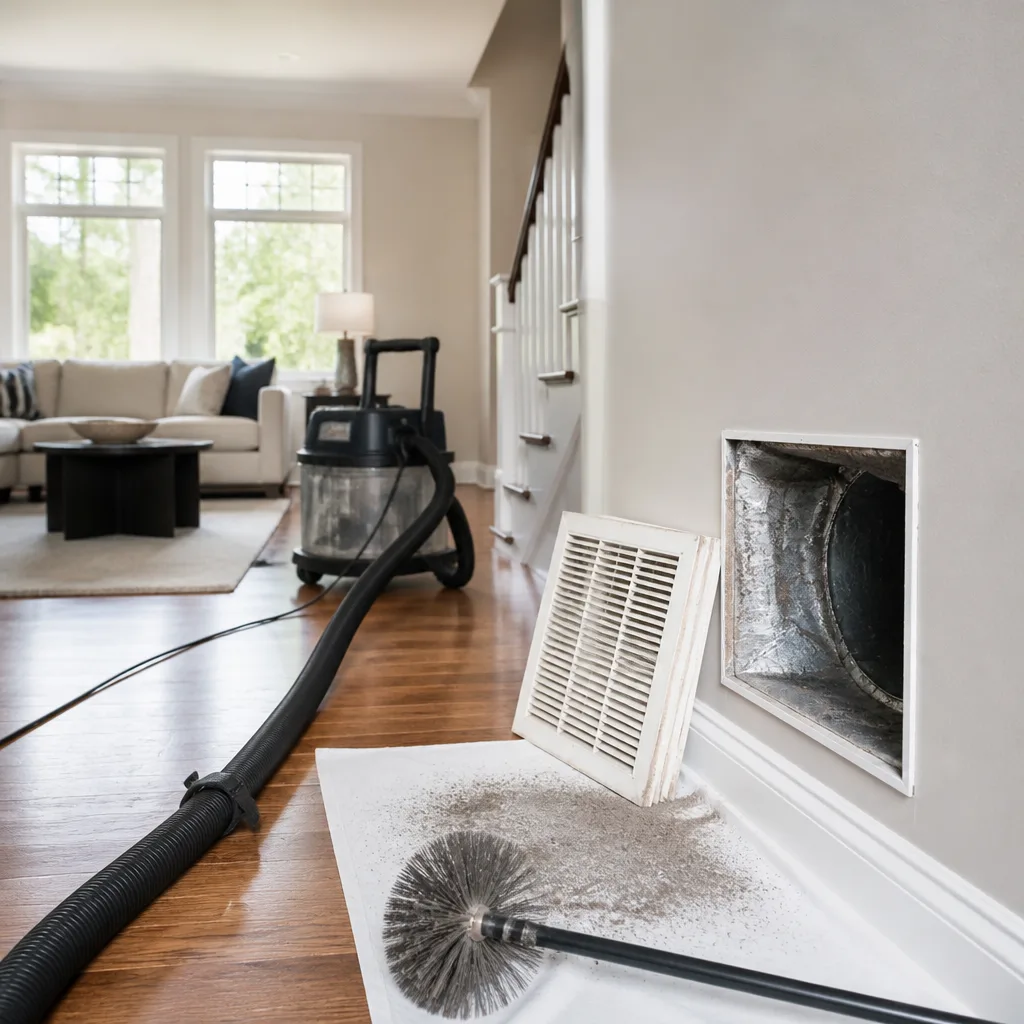 Whole-home duct cleaning
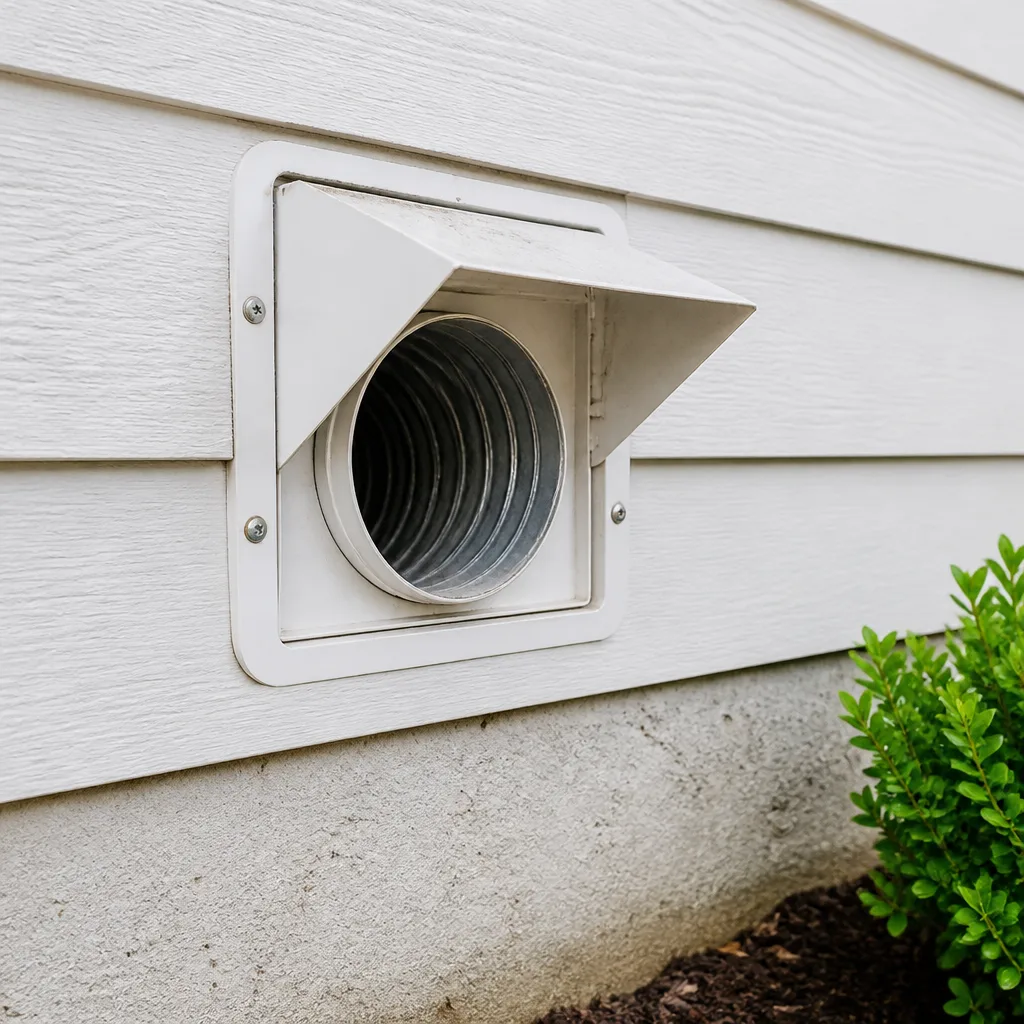 Dryer vent cleaning
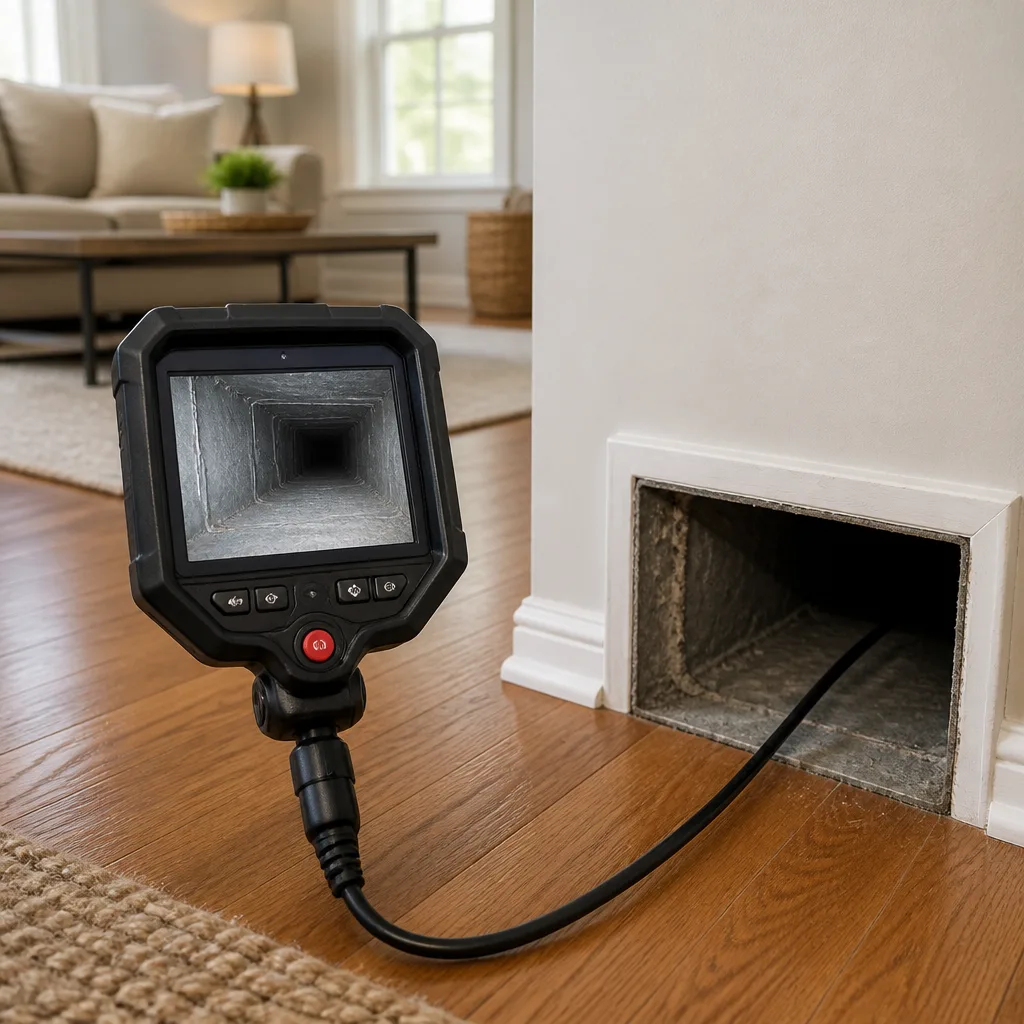 Camera inspection
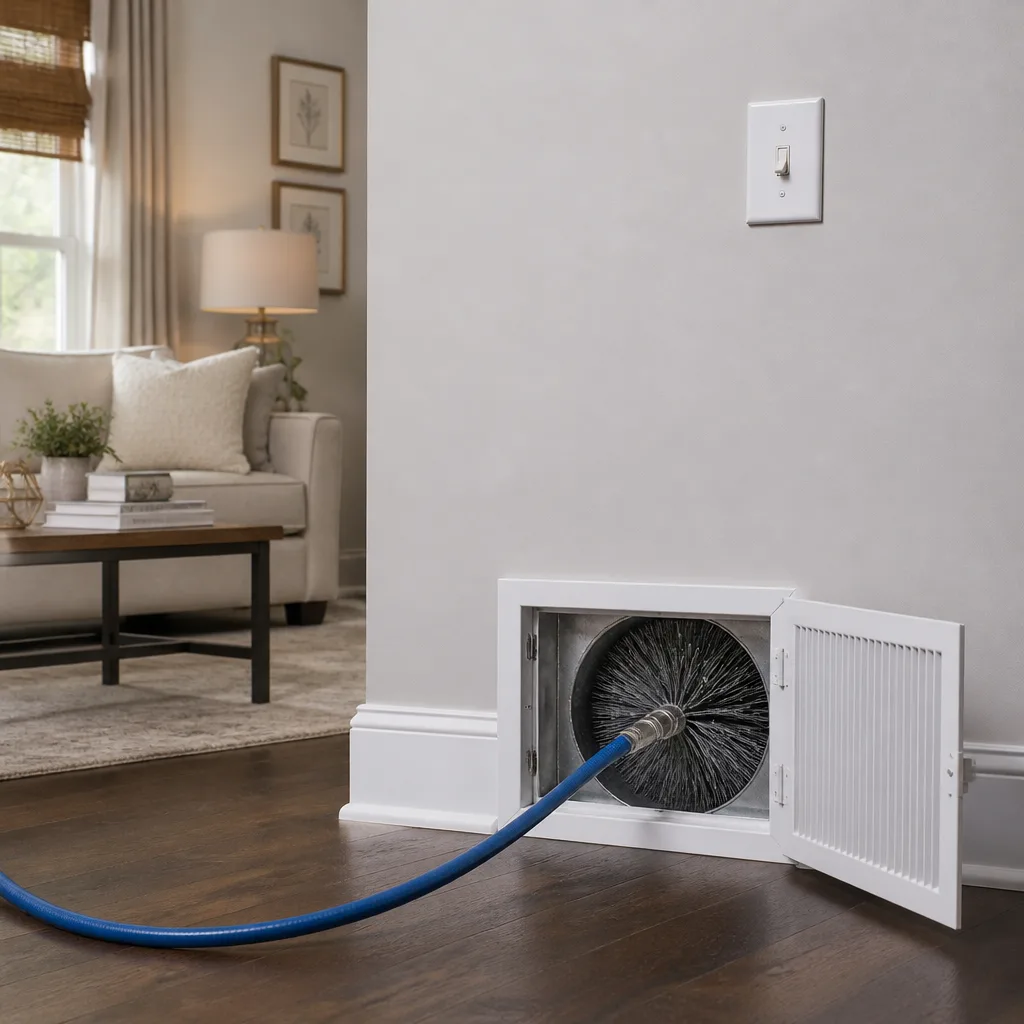 Sanitizing & deodorizing
Whole-system duct and dryer vent check with before-and-after photos - you see exactly what came out of your vents
That "$99 whole-house special" is a bait ad - the real number appears once they are in your hallway, or the "clean" is a shop-vac at the register. We photograph the inside of your ducts before and after instead.
How to Hire an Air Duct Cleaning Contractor in Highlands Ranch: A Step-by-Step Guide
Colorado doesn’t license air duct cleaning contractors. There’s no state plumbing-style board to check, no standing exam to pass, and no state registry that proves the person calling about your ducts in Highlands Ranch knows what negative pressure means. That single fact reframes the whole process. You aren’t choosing between a licensed and an unlicensed contractor; you’re choosing between a company that built its process around source removal and one that bought a machine and a magnet for the truck.
This guide gives you the specific questions, quote structures, and on-site observations that separate the two. By the end, you’ll know how to read a bid, what an honest scope looks like, and what a legitimate crew actually does once it’s in your house.
Quick Answer
Hiring an air duct cleaning contractor in Highlands Ranch means vetting on process rather than licensing, since Colorado doesn’t require a state license for the trade. Ask three questions: what source-removal equipment they run and at what airflow, whether they maintain negative pressure for the entire job, and whether their quote is based on your square footage and vent count. If any answer is vague, keep calling.
Styles & brands we work with
- Whole-home duct cleaning
- Dryer vent cleaning
- Camera inspection
- Sanitizing & deodorizing
Table of Contents
- Why Colorado Doesn’t License Duct Cleaners, and What That Means for You
- The Equipment Questions That Separate Real Operators From Shop-Vac Workarounds
- What NADCA Membership Actually Means (And What It Doesn’t)
- Red Flags in the Highlands Ranch Duct Cleaning Market
- How to Read a Quote: Itemized Scope vs. Flat Rate
- Which Add-Ons Are Legitimate and Which Are Upsells
- What a Legitimate Crew Does On-Site, Step by Step
- How to Verify the Work Was Actually Done
Why Colorado Doesn’t License Duct Cleaners, and What That Means for You
Here’s the part most homeowners in Highlands Ranch don’t realize until they start calling around: there is no state agency that certifies an air duct cleaning contractor in Colorado. HVAC work that involves refrigerant handling or gas connections falls under different rules, but the act of cleaning ducts, vents, and the inside of a forced-air system sits outside any state licensing framework. That’s true across the Denver metro, not just here.
What this means in practice is that vetting is entirely your responsibility. A contractor with a professional-grade Rotobrush system and a written scope can sit right next to a competitor with a shop vac and a magnetic sign, and the state treats them identically. The market itself doesn’t sort them out either. Highlands Ranch has a lot of homes built in the late 1990s and 2000s with the original ductwork still in place, and that age of housing draws every kind of duct cleaner, from established firms to seasonal operations that come through on a promotional push.
So you have to do the sorting. The good news is that it takes about ten minutes of phone conversation, if you know what to ask. Here’s what the state does and doesn’t do:
- No state license: You can’t look up a duct cleaner in a state database the way you can a plumber or electrician.
- No state inspection of the work: Nobody from a state agency looks at the ducts after the job.
- Yes to general business registration: A legitimate company is a registered business entity, so you can check the Colorado Secretary of State’s business database for the legal name and standing.
- Yes to industry certification: NADCA membership and certain technician certifications exist, but they’re voluntary. See the section below on what they mean.
The takeaway: treat the conversation itself as the vetting process. The questions in this guide are built to get you there. If you’d rather skip ahead and talk through your home’s setup, our team at Air Duct Cleaning Highlands Ranch is happy to walk through the details of a full-system job before you commit to anything.
The Equipment Questions That Separate Real Operators From Shop-Vac Workarounds
Ask what equipment the contractor uses. Then ask the follow-up. A real operator will answer both without hesitation, and the answers tell you what actually happens to the dust in your house.
The method itself comes first. There are two broad approaches in the trade:
- Source removal means the debris is physically dislodged from the duct surfaces and captured, usually with a high-velocity rotary brush or air whip connected to a vacuum system, while the whole system is held under negative pressure. This is the method that actually removes the accumulated material.
- Contact vacuum means a vacuum hose is run through accessible portions of the ductwork. It gets what the hose can reach. It doesn’t agitate and lift the material that has settled into the seams and on the duct walls.
A contractor who only does contact vacuum isn’t really cleaning your system; they’re skimming it. Ask directly which method they use, and listen for “source removal” or “rotary brush.” Airflow is the second question: what CFM does the vacuum pull at the working end? Purpose-built professional duct systems are sized to move enough air to entrain debris and keep the system under negative pressure, which is the whole reason the job stays clean indoors. If a contractor can’t tell you the airflow figure, they probably don’t know it.
Then ask about containment. A contractor concerned with airborne dust during the job will use HEPA filtration and keep the space around the work area isolated. Our operation uses Abatement Technologies equipment for exactly that reason: it’s the standard used in remediation work, where containment isn’t optional. When you hear that a company runs Rotobrush and Nikro machines, you’re hearing that they bought equipment built for this trade specifically, not a consumer unit pressed into service.
Three questions, then, that you should ask any contractor before you book:
- Do you use source removal with a rotary brush or air whip, and what’s your CFM rating?
- How do you maintain negative pressure throughout the entire job, not just at the start?
- What filtration and containment equipment are you using inside the house?
Vague answers to any of these are your signal to move on.
What NADCA Membership Actually Means (And What It Doesn’t)
The National Air Duct Cleaners Association publishes standards for the trade, including the ACR standard for assessment, cleaning, and restoration of HVAC systems. Membership signals that a contractor has chosen to align with that body of standards and, in many cases, has technicians who have taken its certification exams. That’s meaningful. It’s not a license, and it doesn’t substitute for asking the equipment questions above.
Here’s the distinction that matters. NADCA membership is self-selected. A company joins and commits to following the association’s standards; nobody from NADCA shows up to inspect the work. So membership tells you something about the operator’s intent and training, and nothing about any specific job they’ve done in Highlands Ranch. It’s a useful filter, not a guarantee.
What it does help with:
- A baseline of standards awareness: Members work from a written industry standard rather than an improvised method.
- Technician certification: NADCA offers certification programs, so you can ask whether the crew that will arrive has certified technicians or whether the certification is held elsewhere in the company.
- A conversation opener: Knowing the organization exists lets you ask better questions, like whether the contractor follows the ACR standard and how they document the job.
“Membership in good standing” is the phrase to ask about, and a real member can say yes without fumbling. But don’t treat a logo on a website as settled fact. Ask the question directly: are you a member of NADCA in good standing, and are your technicians certified? Then cross-reference the equipment answers from the previous section. A certified contractor running consumer equipment is still a smaller job than you’re paying for, and a non-member running Rotobrush and Nikro with documented negative pressure is doing real work.
The reputation of the whole trade suffers from the fact that homeowners can’t easily tell the difference. In our experience, the contractor who can answer the standard questions directly is the one who takes the work seriously, whether or not they carry the badge.
Red Flags in the Highlands Ranch Duct Cleaning Market
Highlands Ranch has the housing stock that gets targeted: a lot of homes with the same age of construction, a steady stream of households with young families and allergy concerns, and neighborhoods where a single promotional mailer lands in thousands of mailboxes at once. That’s exactly the environment where “whole house specials” flourish. A price that sounds like a full-system cleaning, offered before anyone has asked about your home, is the first thing to be skeptical of.
Here are the specific patterns to watch for:
- “Whole house special” pricing that hasn’t seen your house. A real quote requires your square footage and your vent count. A price offered before either is known is a headline, not a quote, and the final invoice gets built on-site.
- Quotes given without asking about square footage or number of vents. If the person on the phone doesn’t ask, they aren’t pricing the work; they’re pricing the visit.
- Per-vent pricing presented as the total. You want a whole-system price agreed before work starts, not a number that multiplies with every register.
- Pressure to add mold treatment or UV lights during the visit. Legitimate add-ons can wait for a second visit and a written recommendation. On-the-spot sales pressure after the main work is a classic upsell structure.
- No written estimate. The scope and price should be in writing, and the written estimate is what sets the final price.
- No documented process. If a contractor can’t describe exactly what they’ll do, they can’t do it consistently.
In a market where the state doesn’t regulate the trade, a homeowner’s best defense is a contractor who is willing to put the scope in writing and answer questions before the truck rolls. That’s the standard we hold ourselves to: one flat price per system, agreed before work starts.
How to Read a Quote: Itemized Scope vs. Flat Rate
Once you’ve narrowed the field, the document you get next tells you almost everything. An itemized scope lists what will be done: which portions of the system, how many supply and return drops, whether the air handler and coil are included, whether sealing is part of the job, and what cleaning method applies to each part. A flat rate with no scope is a number, and a number is not a plan.
You want both, honestly: an itemized scope that describes the work, and a single flat price for the system as a whole. A per-vent rate for a full-system job is a red flag because it invites surprise line items, and a bare flat price without a scope doesn’t tell you what you’re getting. The structure to look for looks like this:
- System size basis: Square footage and vent count, stated, so you know what the price is built on.
- Scope of work: Supply ducts, return ducts, registers, grilles, and the air handler or coil, each called out if included.
- Equipment named: The method and the machine, not just “professional cleaning.”
- Add-ons, priced separately and optional: Sealing, sanitizing, dryer vent as a standalone, any filtration hardware.
- Total price and payment terms: One figure for the full system, in writing.
A quote built this way lets you compare apples to apples. If one contractor lists the air handler and another doesn’t, you can see why one price is higher. If one prices per vent and another prices per system, you know which one is more likely to stay put.
While you’re comparing, ask about the rest of the airflow picture. Clean ducts only help if the system isn’t leaking elsewhere, which is why our HVAC cleaning work extends to the unit and coil. And if the quote includes work on the clothes dryer’s exhaust, that’s a different service with a different safety rationale, which is why we treat dryer vent cleaning as its own scope rather than bundling it silently into the duct price.
Which Add-Ons Are Legitimate and Which Are Upsells
Some add-ons genuinely serve the system, and some are sold because they carry margin. The difference is whether the recommendation is tied to something the technician observed, and whether you’re given room to think it over.
Legitimate additions, priced separately and recommended in writing:
- Duct repair and sealing. Leaky ducts undo the value of a cleaning. If the crew sees gaps at the plenums or disconnected flexible runs, a sealing scope is a real fix for a real problem. It’s also the reason a contractors who can both clean and seal is more useful than one that only cleans; the loop closes in one visit.
- Air quality sanitizing. When there’s evidence of biological growth or odor in the system, a sanitizing treatment applied to the appropriate surfaces is a valid next step.
- Filtration and purification hardware. Upgrading a filter cabinet or adding a humidifier is a legitimate long-term improvement, especially in a Highlands Ranch home where the furnace runs a lot. We work with air duct cleaning alongside brands like Honeywell and Aprilaire because these systems have to be sized correctly and installed to spec, not picked off a shelf.
Upsell patterns, by contrast, look like this: mold treatment recommended without any inspection or documentation of mold; UV lights sold as a package during the visit with no explanation of what they do or where they mount; a sanitizing fog offered with no evidence the system needs it. None of these are inherently bad products. The issue is the selling. A recommendation that comes with a written observation, a clear scope, and time to decide is service. A recommendation that comes from the invoice pad at the end of the visit is a sale.
The healthy posture: you should be given a written recommendation and the option to schedule it later. Any contractor who pushes back on that is telling you something about how the whole business runs.
What a Legitimate Crew Does On-Site, Step by Step
Once the truck is in the driveway, the job itself follows a recognizable arc. If you watch the crew work, here’s the sequence a legitimate job follows from setup to wrap-up.
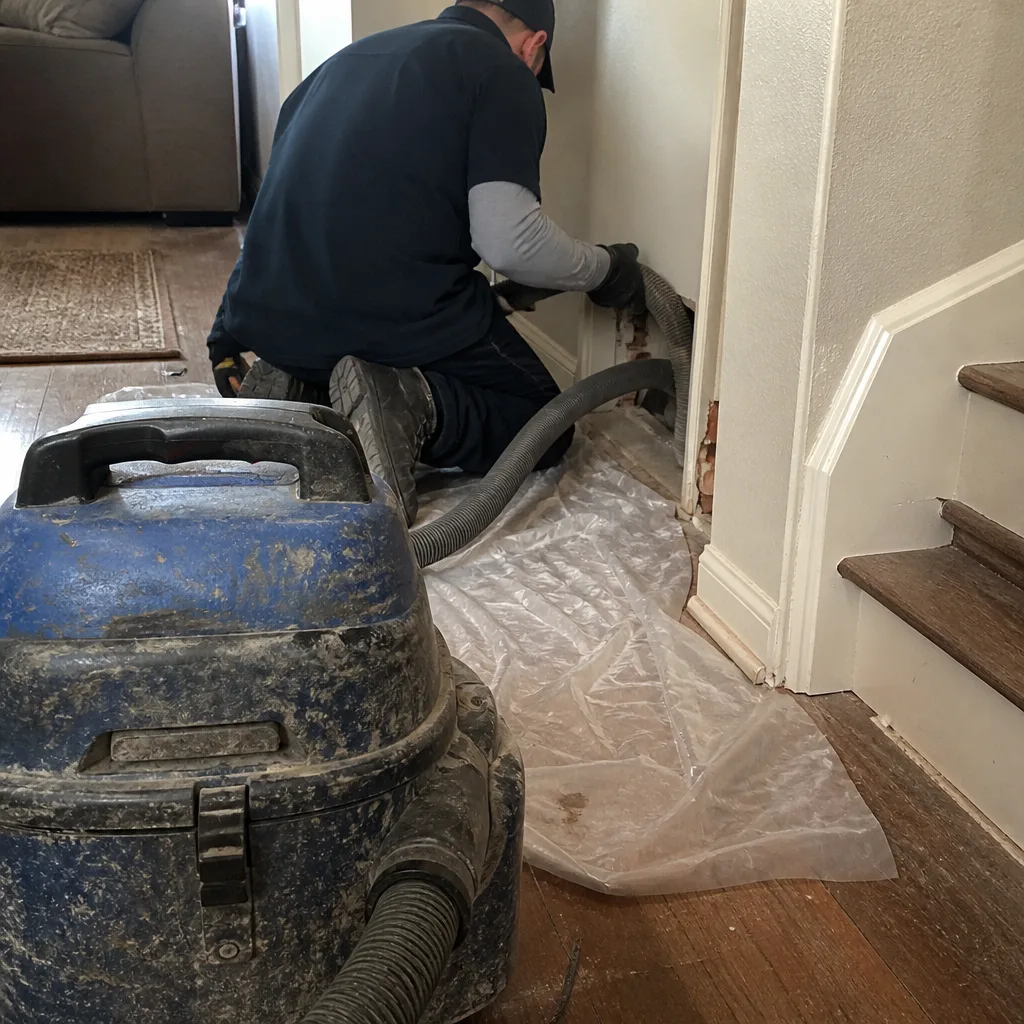
- Protect the space. Floor coverings go down, and the work area is isolated with containment to keep the rest of the house out of the dust path.
- Introduce the vacuum and establish negative pressure. The truck-mounted or high-capacity unit connects to the system, and the whole duct network is pulled into negative pressure before cleaning begins. That pressure stays on for the duration, not just the first few minutes.
- Clean each run with source-removal equipment. A rotary brush or air whip travels each duct, agitating the accumulated material so the airflow can carry it back to the vacuum.
- Clean the components. Registers and grilles are removed and cleaned. The air handler, blower, and coil are cleaned according to the scope you agreed to.
- Seal and reinstall. Registers go back, and any disconnected joints or gaps found during cleaning are repaired and sealed.
- Document. Before-and-after photos of your own ducts, taken as part of the job, show what was there and what’s there now.
What you’re watching for is containment and airflow. If the crew works with the system open and no visible filtration unit, the debris has to go somewhere, and your living room is the somewhere. In our experience, a crew that keeps the HEPA unit running the whole time and checks the vacuum connection at every step isn’t doing anything unusual; that’s just the method done correctly.
Around Highlands Ranch, the season matters here. The furnace runs long stretches through the cold months, then the AC takes over in the summer, and the ductwork sees near-constant airflow most of the year. That cycle pulls more dust through the system than a milder climate would, and it’s one more reason the on-site process needs to actually remove the material rather than redistribute it.
How to Verify the Work Was Actually Done
You don’t have a state inspector to call afterward, so verification is on you. The good news is that a legitimate job leaves evidence. Before and after photos of your own ducts are the single most useful artifact. They should show the inside surfaces before cleaning and again after, taken as part of the same job, and a real contractor will share them with you without a fuss.
A quick post-job check you can do yourself:
- Look inside a few registers. Remove a couple of grilles and look at the duct surfaces. They should look clean, not freshly coated with a thin film of dust.
- Check the furnace filter. If the job included the air handler, the filter condition tells you something about how much material came through.
- Ask about the photos. If they weren’t offered, ask. A contractor with nothing to hide will send them.
- Keep the written scope. Compare what you paid for against what was documented. Add-ons like sealing should show up as separate line items, done and photographed.
If the crew sealed your ducts as part of the work, check that the visible joints at the plenums and the flexible runs are taped and intact. A sealing scope that doesn’t show up in the photos wasn’t done. If the crew was asked to handle a dryer vent under the same visit, that’s a separate check entirely, but the same rule applies: the work should be visible and documented.
Finally, keep the written scope and the written estimate together. That file is your record of what you paid for, and it’s the only formal documentation this trade produces.
Common Mistakes to Avoid
- Booking the lowest promotional price before asking about your home. A “whole house special” offered before the contractor asks about square footage or vent count isn’t a quote, and the final invoice grows once the technician is on-site. Ask for a written, whole-system estimate first.
- Confusing NADCA membership with a license. It’s a useful filter, but it’s self-selected and not inspected by the association. Pair it with direct questions about equipment and method instead of letting the logo stand in for the whole conversation.
- Accepting per-vent pricing for a full-system job. Per-vent quotes invite line-item creep. You want one flat price for the system, agreed before work begins.
- Skipping the “what equipment” question. If you don’t ask about source removal, CFM, and negative pressure, you can’t tell a professional job from a shop-vac skim until after the crew leaves and the dust settles.
- Buying add-ons under pressure during the visit. Legitimate recommendations should be in writing and come with time to decide. A mold treatment or UV light sold on the spot, with no evidence shown, is a sale, not a service.
- Overlooking the rest of the airflow system. Clean ducts in a leaking system lose their value quickly. In an area like Highlands Ranch, where the HVAC runs through long heating and cooling seasons, sealing the leaks that undo the cleaning is worth asking about.
- Not verifying afterward. Without photos of your own ducts and a written scope to check against, you have no way to confirm what was actually done, which is exactly the gap the industry’s reputation gets built on.
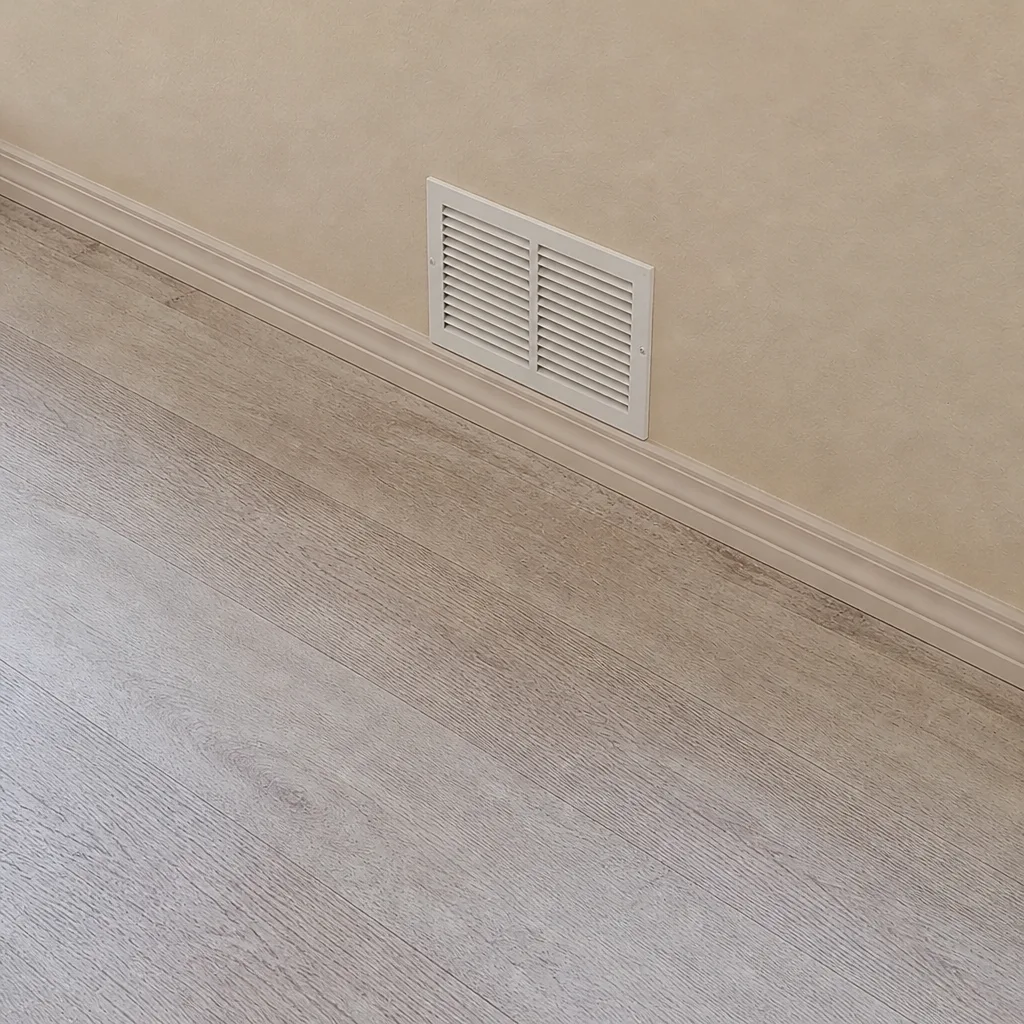
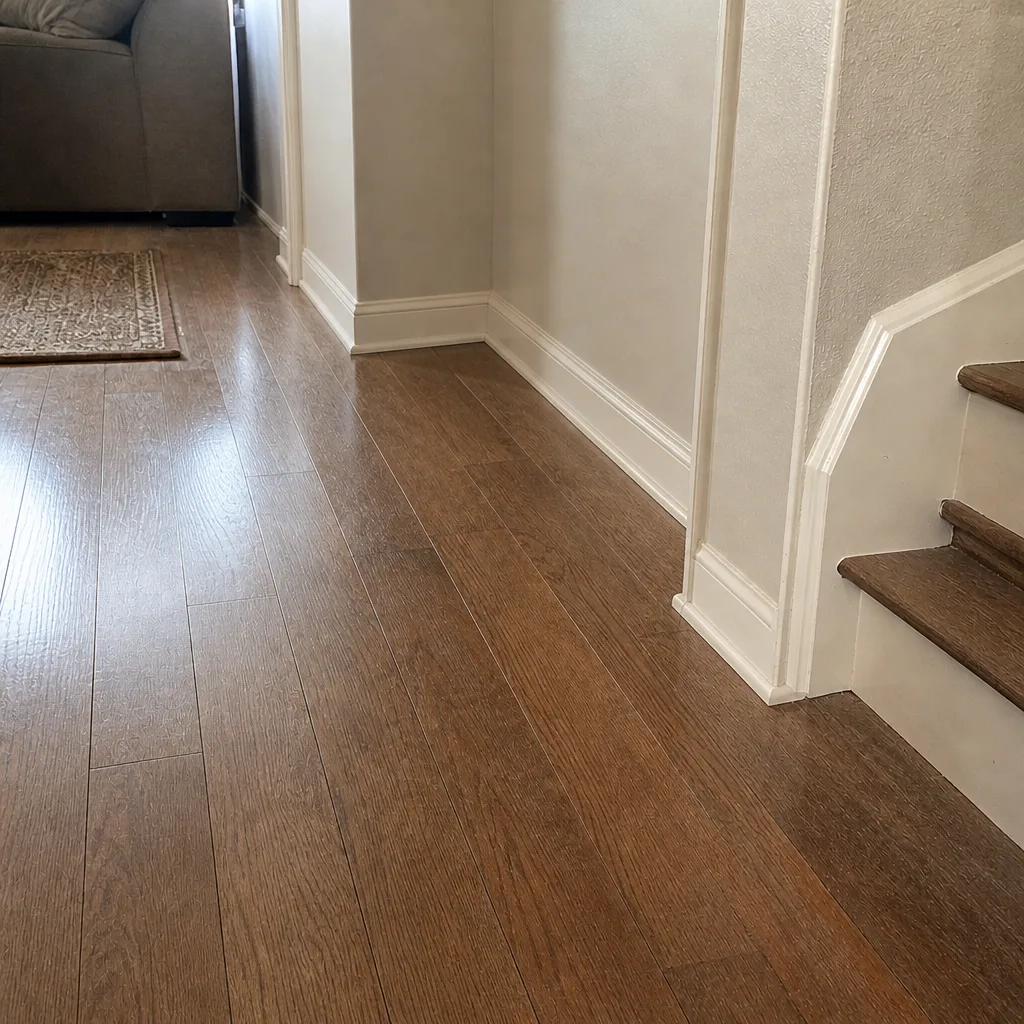
See the difference
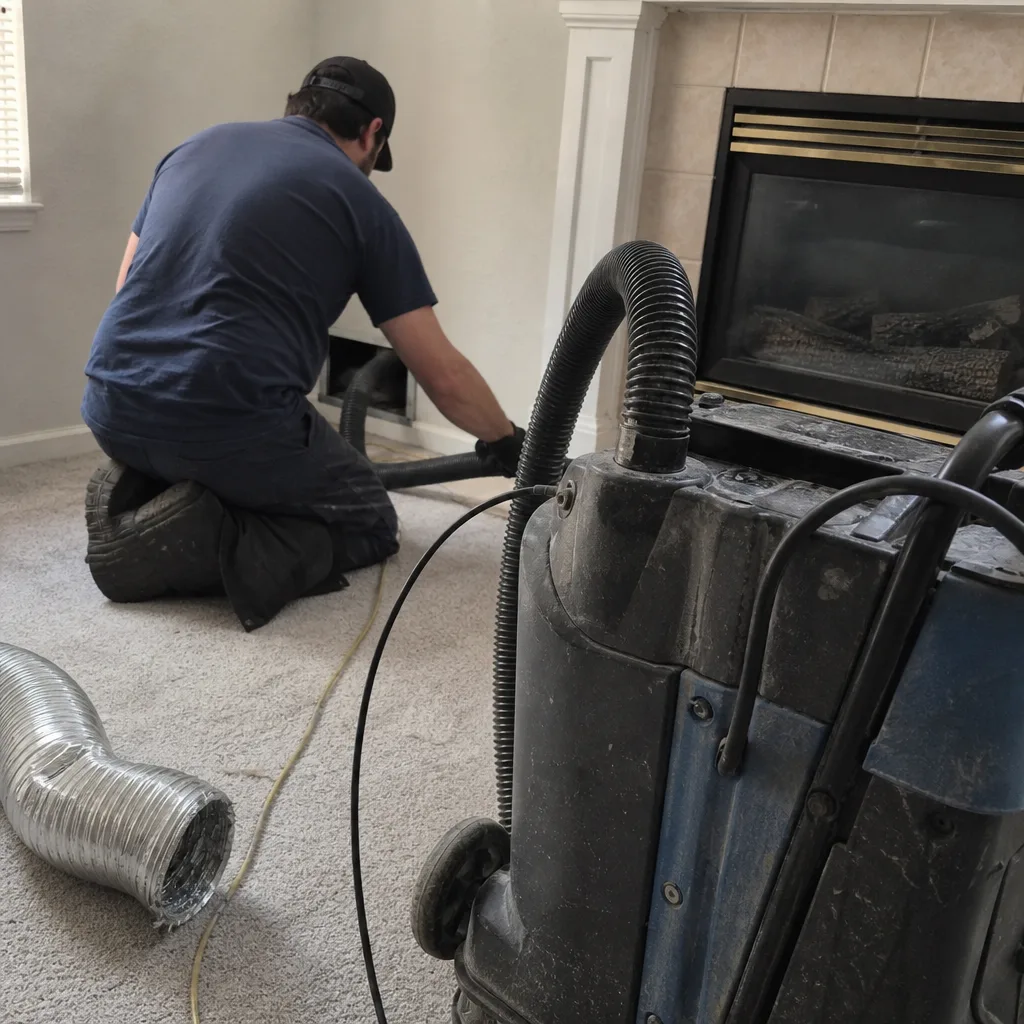 Before
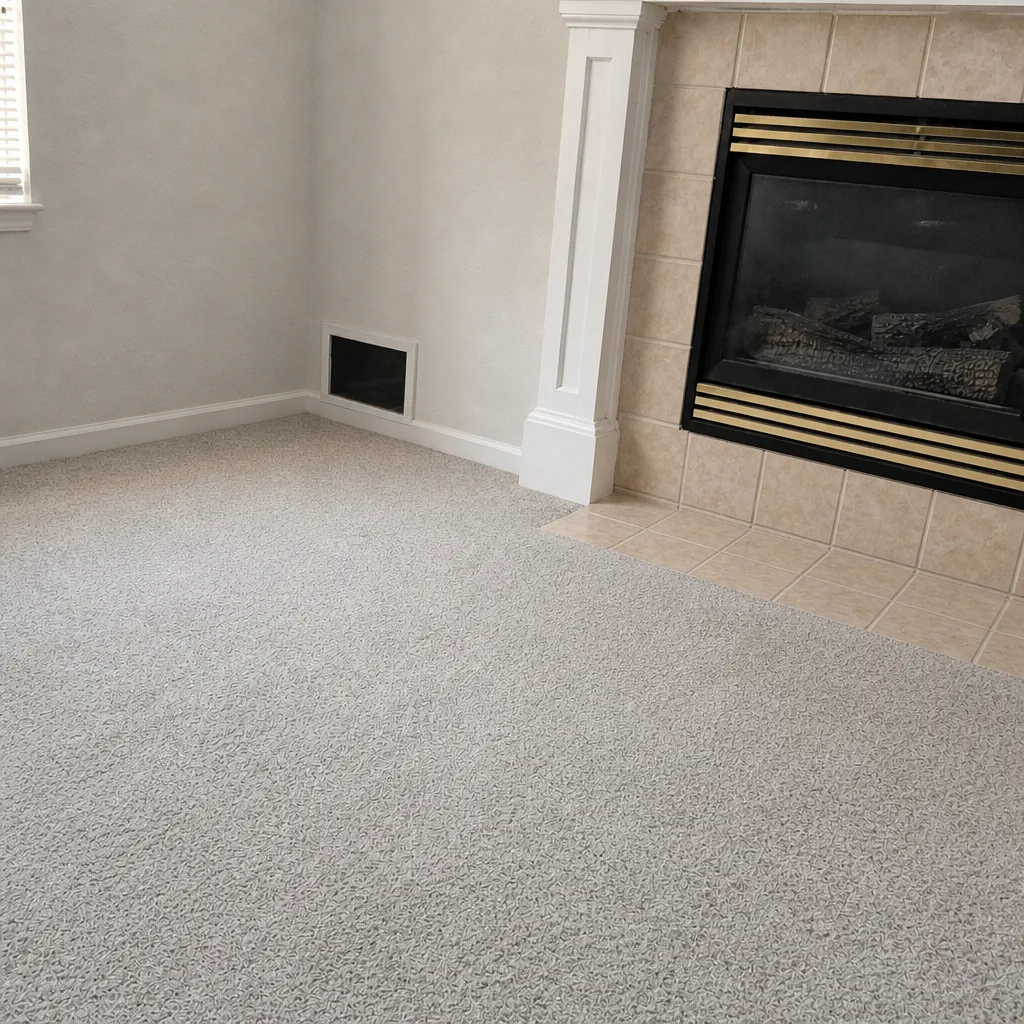 After
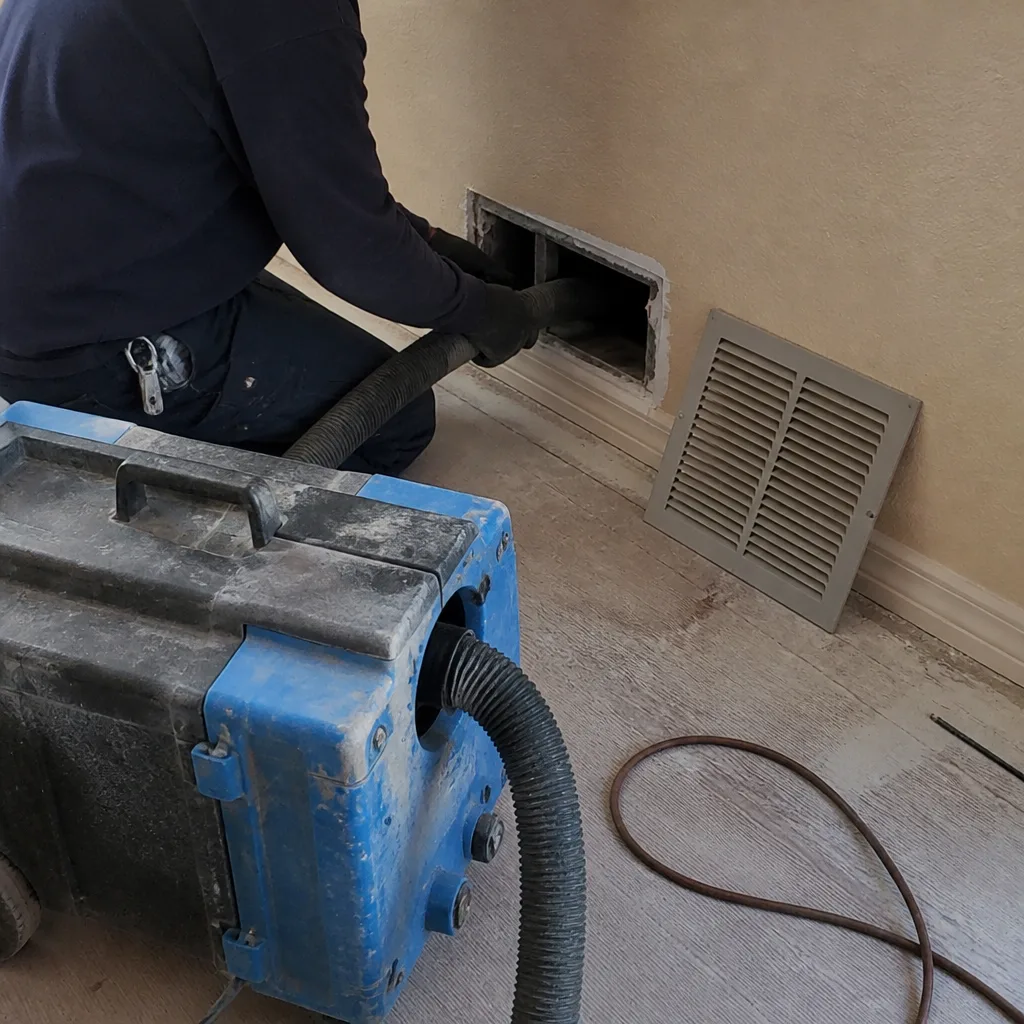 Before
 After
 Before
 After
When to Call a Professional
Call a professional when the system tells you it needs attention: visible dust blowing out of registers, a persistent musty odor when the heat or AC kicks on, allergy or asthma symptoms that seem worse indoors, or a home that’s had no duct service since it was built. A recent renovation is another trigger, since construction dust finds its way into the return plenum. A disconnected or crushed flexible run, a dryer vent that hasn’t been touched in years, and any visible gaps at the plenums are all reasons to get someone knowledgeable in the house. You don’t need to diagnose any of it yourself; the right contractor will assess the system and put the scope in writing.
Air Duct Cleaning Highlands Ranch offers free estimates in Highlands Ranch. Call (844) 443-4896 to talk through the system and get a flat per-system price in writing. We answer 24/7. Fast dispatch from 7am to 7pm, Sunday through Friday.
Frequently Asked Questions
Air duct cleaning in Highlands Ranch is priced per system, not per vent, and the final price depends on your square footage, vent count, and whether the air handler is included in the scope. The written estimate is what sets the price, and you should have it before any work begins. Call (844) 443-4896 for an exact quote – estimates are free.
Cheap quotes usually reflect a different job: contact vacuum instead of source removal, no containment, and a price that grows on-site once a per-vent rate or add-on is applied. If a quote arrives before the contractor knows your square footage and vent count, it isn’t based on your home. Call (844) 443-4896 for a written whole-system estimate in Highlands Ranch so you can compare like with like.
Colorado doesn’t license the duct cleaning trade, so there’s no state license to check for this work. Vetting falls to you, so ask about equipment, source removal, negative pressure, and NADCA membership, and get the scope in writing. Call (844) 443-4896 to ask those questions directly of our team.
Ask for before-and-after photos of your own ducts, taken during the job, and compare what you see against the written scope. You can also check a few registers yourself after the crew leaves. A contractor with nothing to hide will share the photos without being asked. Call (844) 443-4896 to arrange a Highlands Ranch estimate and see what’s included.
There’s no fixed schedule that fits every home; the honest answer depends on your HVAC usage, whether you’ve had recent renovations, pets, and what you’re seeing at the registers. Homes that run their systems heavily, as most do through Highlands Ranch’s long heating and cooling seasons, benefit from more frequent attention. Call (844) 443-4896 and we’ll talk through your home to give you a realistic interval.
Yes, dryer vent cleaning is offered as a standalone service and can be handled in the same visit as your duct work, and each has its own written scope. Dryer vent work addresses a fire-safety maintenance item the National Fire Protection Association recognizes, so it’s worth asking about even if your ducts are fine. Call (844) 443-4896 to schedule both in Highlands Ranch.
The Bottom Line
No state license will do your vetting for you in Colorado, so the questions you ask are the whole game. Ask about source removal, CFM, and negative pressure. Ask whether the contractor keeps the system under containment for the entire job and what equipment they run. Ask about NADCA membership, then ask a follow-up about technician certification. Ask for an itemized scope and a single flat price for the system, agreed before work starts. Be skeptical of any “whole house special” that predates a question about your square footage. Dodge the on-site upsell. Then verify the job was done with before-and-after photos of your own ducts. Do those things, and the low-bid van sorts itself out of the running.
Air Duct Cleaning Highlands Ranch handles the full airflow picture: ducts, vents, the HVAC unit, sealing, and sanitizing. Our technicians have up to 15 years of experience, and we work with professional-grade equipment from Rotobrush, Nikro, and Abatement Technologies. Call (844) 443-4896 for a free estimate in Highlands Ranch. We answer 24/7. Fast dispatch from 7am to 7pm, Sunday through Friday.
Written by the team at Air Duct Cleaning Highlands Ranch.