
Last updated November 23, 2026
 Whole-home duct cleaning
 Dryer vent cleaning
 Camera inspection
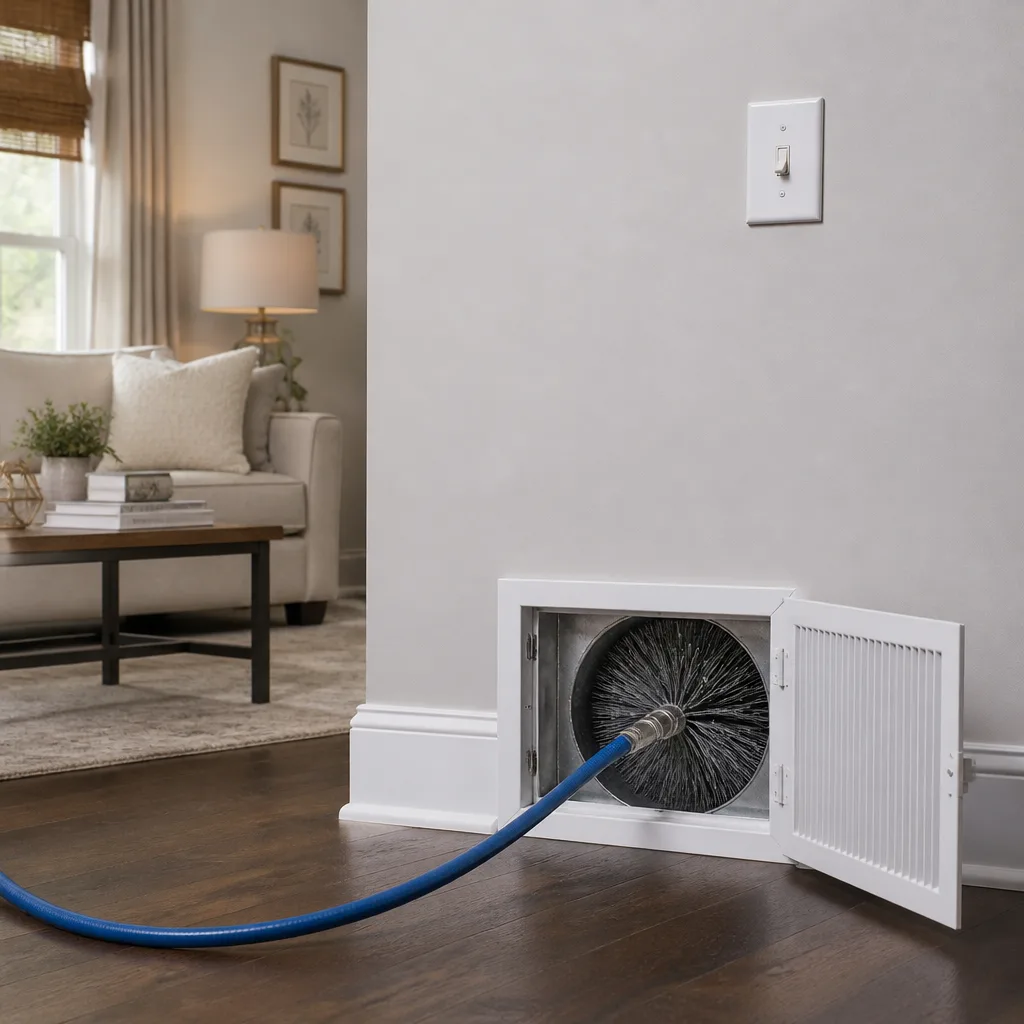 Sanitizing & deodorizing
Whole-system duct and dryer vent check with before-and-after photos - you see exactly what came out of your vents
That "$99 whole-house special" is a bait ad - the real number appears once they are in your hallway, or the "clean" is a shop-vac at the register. We photograph the inside of your ducts before and after instead.
The Complete Guide to Air Duct Cleaning in Highlands Ranch
Most homeowners who’ve had their ducts cleaned can’t describe a single piece of equipment the technician brought into the house. That’s the tell. A proper job runs on purpose-built machinery, not a shop vacuum and a ladder. And in Highlands Ranch, where semi-arid air and clay-heavy soil push fine dust into return systems faster than most people expect, the difference between a real cleaning and a vent swipe shows up within a season. This guide walks through what the equipment does, why elevation changes how suction performs, what a full-system job actually includes, and how to verify the work was done right.
Quick Answer
A complete air duct cleaning in Highlands Ranch involves five stages: a camera inspection of the duct interior, mechanical agitation of the duct walls, sustained negative pressure through a HEPA-filtered collection unit, cleaning of every supply and return register, and a post-cleaning verification pass. Because Highlands Ranch sits at roughly 5,800 feet and its semi-arid climate loads return air with fine clay particulate, skipping agitation or negative pressure leaves the same dust in place. Air Duct Cleaning Highlands Ranch uses professional-grade Rotobrush and Nikro equipment for the work, with Abatement Technologies units handling containment and filtration. The estimate is free, and pricing is set per job by a written estimate before anything starts.
Styles & brands we work with
- Whole-home duct cleaning
- Dryer vent cleaning
- Camera inspection
- Sanitizing & deodorizing
Table of Contents
- Why the Equipment Matters More Than the Price
- What 5,800 Feet and Clay Soil Do to Your Ducts
- The Full Scope of a Proper Job: Step by Step
- Beyond the Ducts: Coils, Blower, and the Air Handler
- What a Camera Inspection Reveals
- Why Cleaning Without Sealing Undoes the Work
- The Dryer Vent Is Part of the Same Conversation
- How to Verify the Work Was Actually Done
Why the Equipment Matters More Than the Price
Duct cleaning is a mechanical process with two jobs that have to happen at the same time: loosen what’s stuck to the duct walls, and carry it out of the system without releasing it into the house. Consumer-grade vacuums can’t do either well. Purpose-built equipment can.
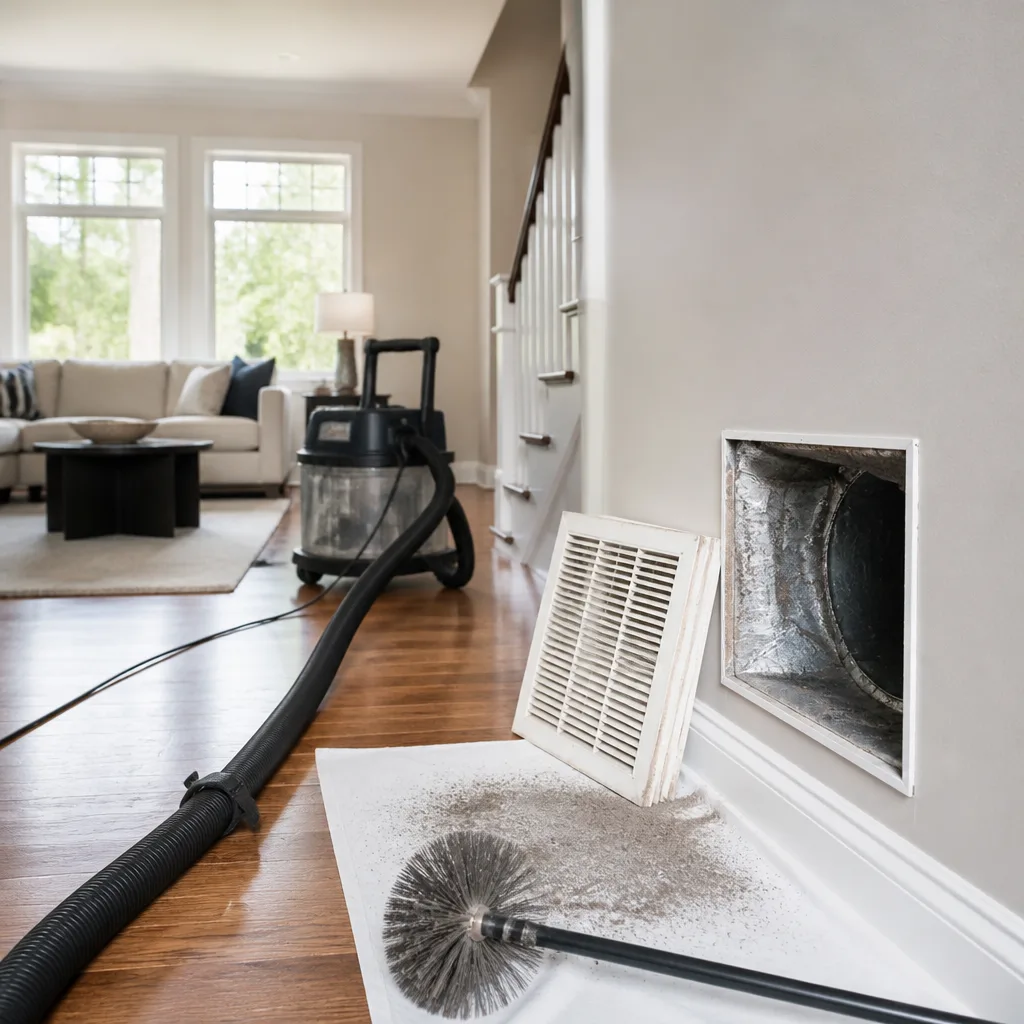
The two names worth knowing in residential duct cleaning are Rotobrush and Nikro. Rotobrush systems drive a rotating brush head through the duct run on a flexible shaft, scrubbing the interior surface while a high-volume vacuum pulls material back toward the collection unit. Nikro builds negative-pressure and HEPA filtration equipment designed to hold the dust in a contained airstream for the entire job. When both halves of that system are running correctly, dust moves one direction: out.
On the containment side, Abatement Technologies equipment is the standard we reach for. It’s the same class of HEPA filtration hardware used in remediation work, where the stakes on airborne particulate are higher than a typical cleaning. Running filtration and containment together during a Highlands Ranch duct cleaning means the fine clay dust loosened from the ducts doesn’t settle back onto the furniture or, worse, into the return plenum you just cleaned.
Here’s the practical test. If a quote doesn’t name any equipment, or the technician arrives with a portable vacuum and no containment unit, you’re paying for a surface treatment. Suction on a portable machine can move loose dust near the register. It can’t scrub duct walls.
What 5,800 Feet and Clay Soil Do to Your Ducts
Highlands Ranch sits on the western edge of the Denver metro, on a high plain where the soil runs heavy with clay and the air runs dry most of the year. Both facts feed the duct system.
Clay-heavy soil doesn’t absorb water or dust the way sandy or loamy ground does. It fines up. Wind moving across open ground and construction lots lifts those fines into the air, and they migrate indoors through every gap in the building envelope, then get pulled into the return air system. You can’t see them on a countertop. You can absolutely find them coating the inside of a return plenum after a couple of seasons.
Low annual humidity compounds it. Dry indoor air keeps fine particulate suspended longer instead of binding to surfaces, and that longer suspension time means more passes through the return ductwork. Homes in Highlands Ranch with allergy or asthma concerns often notice the effect as dust settling faster on horizontal surfaces, a musty odor near registers when the system starts up, or visible debris on supply grilles.
Then there’s the altitude. At roughly 5,800 feet, air density is meaningfully lower than at sea level. A vacuum rated for a given airflow at low elevation moves less air mass at the same motor output up here. That’s not a knock on the equipment. It’s a reason suction power actually matters and a reason a weak consumer unit underperforms even worse than the box suggests. Contractor-grade systems have the headroom to hold negative pressure at this elevation; a $99 coupon machine does not.
Practical takeaway: in Highlands Ranch, dust loading is predictable and elevation makes suction margin critical. Air duct cleaning is a scheduled maintenance item here, not a one-time fix after something goes wrong.
The Full Scope of a Proper Job: Step by Step
A real duct cleaning in Highlands Ranch follows a sequence. Each step depends on the one before it. When a company skips a stage, the ones after it lose value.
- Inspection and walkthrough. The technician maps the system: how many supply and return runs, where the air handler sits, whether there’s a zone control system, and where access ports will need to be cut. They also check for loose joints, disconnected runs, or moisture.
- Negative pressure setup. A HEPA-filtered negative-pressure unit hooks into the system at a central point, usually the main supply or return trunk. Every register is sealed so the whole duct system is under continuous vacuum before any agitation starts.
- Mechanical agitation. A rotating brush head or air whip travels each run and scrubs the interior walls. This is the step that dislodges the clay fines bonded to the metal. No agitation, no cleaning.
- Register and vent cleaning. Every supply and return grille is removed, washed, and reinstalled. Grilles collect dust on the surface the ducts can’t reach.
- Post-cleaning verification. The technician re-runs the camera, checks the negative-pressure unit’s filter for collected material, and confirms visually that each run comes back clean. Before-and-after photos of your own ducts are part of this.
Steps three and five are where thin jobs show up. If a company can’t show you agitated duct walls and a filter full of what came out, the “cleaning” was a register wipe.
Timing varies by home. A typical Highlands Ranch single-family house with one HVAC system runs a few hours. Larger homes with multiple air handlers take longer, and any system that hasn’t been serviced in several years will take longer still.
Beyond the Ducts: Coils, Blower, and the Air Handler
The ductwork is the delivery route. The HVAC unit is what conditions the air. Cleaning one without evaluating the other misses the biggest contributor to poor indoor air quality in most homes.
- Evaporator coil. A dirty coil restricts airflow, forces the blower to work harder, and can grow biological matter where condensation forms. A coil matted with clay dust is a coil running at reduced efficiency.
- Blower compartment and blower wheel. The blower wheel’s fins collect dust evenly, and once they’re loaded, the whole system moves less air. This is invisible from outside the cabinet.
- Air handler cabinet interior. Dust accumulates on the cabinet walls, and that dust can re-enter the airstream on startup.
- Filtration hardware. Whether your system runs a basic filter slot, a media cabinet, or a powered filtration unit changes how much dust reaches the coil in the first place.
This is where HVAC cleaning differs from duct cleaning. Duct cleaning handles the distribution system. HVAC cleaning handles the equipment itself. In our experience, a home with a visibly dirty coil and clean ducts will still see poor air quality and higher energy use. The two belong in one visit.
Filtration hardware also matters over the long term. Air Duct Cleaning Highlands Ranch works with and installs products from Honeywell and Aprilaire, both of which build media cabinets, humidifiers, and filtration systems designed for residential HVAC equipment. We also work with Guardsman products for air quality hardware. The point isn’t to upsell a box; it’s that a technician who understands filtration can tell you whether your current setup is sized for your home or is letting fine particulate through to the coil.
What a Camera Inspection Reveals
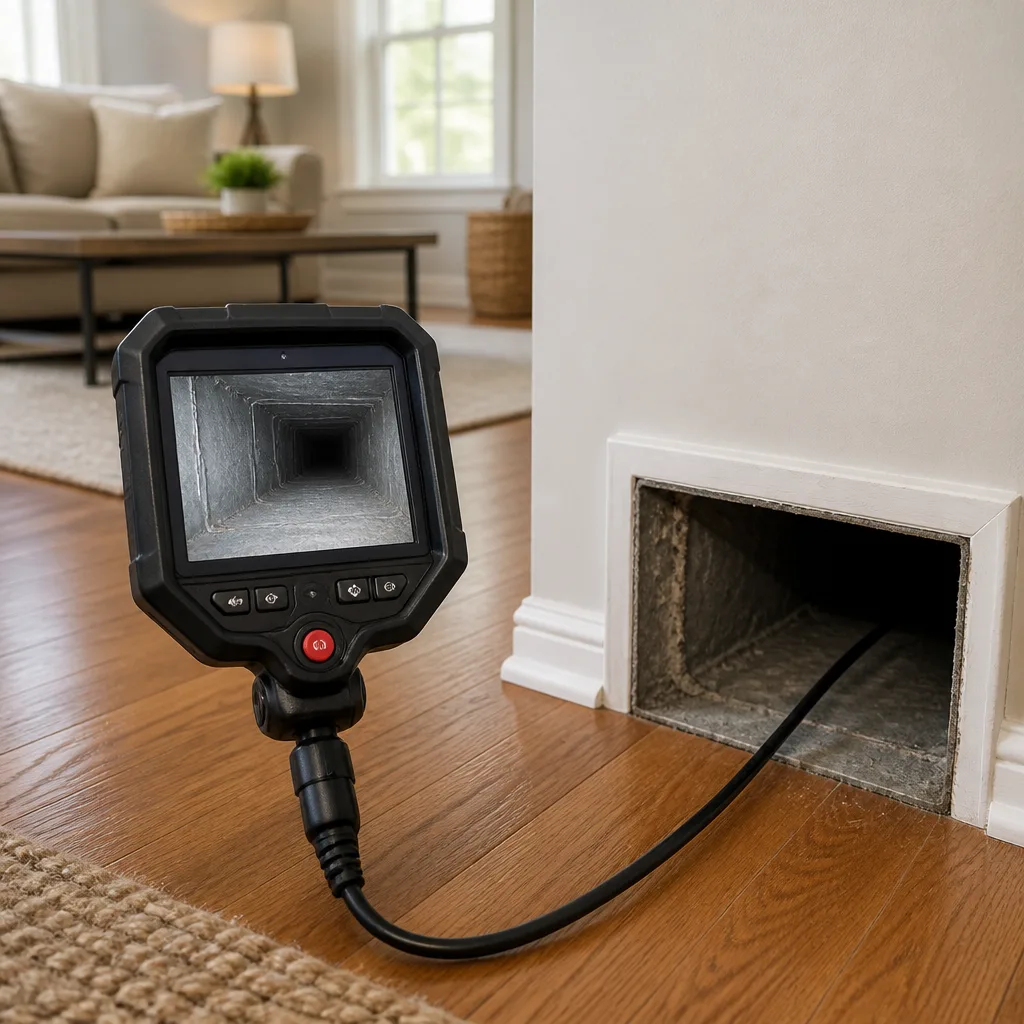
A camera inspection puts a lit lens on a flexible cable into the duct run. It’s not a gimmick. It’s how you know what you’re dealing with before you quote a job.
What it reveals:
- Actual debris buildup. Loose dust, matted lint, or construction debris from a renovation. Each one calls for a different cleaning approach.
- Duct condition. Cracked seams, separated joints, and crushed sections of flex duct are common findings. A crushed run may need replacement, not cleaning.
- Moisture and biological growth. Elevated moisture in a duct indicates a leak source, and cleaning alone won’t fix it.
- Prior work quality. If a previous company left access holes unsealed or cut corners, the camera shows it.
If a quote arrives without any inspection step, treat that as a red flag. A company can’t price a job properly or clean to a standard they haven’t defined. It also means you have no baseline to compare against post-cleaning.
In the Highlands Ranch housing stock, camera findings tend to cluster. Homes with long flex duct runs to second-floor registers often show sagging and debris accumulation at the low points. Homes older than a decade show more seam separation. Renovations leave construction dust in the return plenum for months afterward. The camera is what surfaces the specific issue in your home rather than a generic answer.
Why Cleaning Without Sealing Undoes the Work
A duct system that leaks 10% to 30% of its air into an attic or crawl space is drawing that same volume of outdoor air into the system somewhere else. That outdoor air in Highlands Ranch carries clay fines. Cleaning the ducts without sealing the leaks means the system refills with the same particulate within a season.
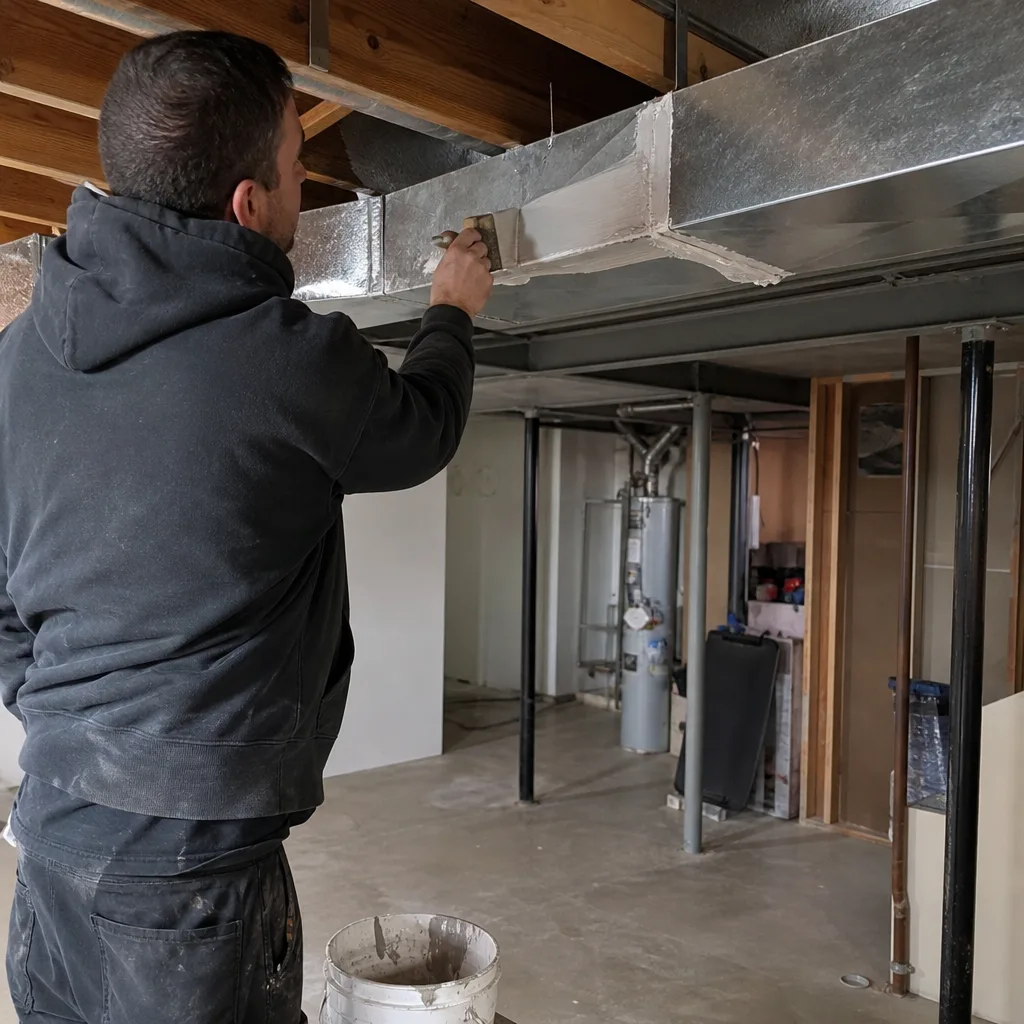
Sealing closes the loop. Mastic, mesh, and in some cases aeroseal-style interior sealing compound are applied to the leak points identified during camera inspection. A properly sealed system pulls conditioned air from the intended return, not from an unconditioned space. The cleaning stays clean, the system runs less to move the same air, and the filtration hardware you paid for isn’t doing work on unfiltered outdoor air.
This is why duct repair and sealing belongs in the same visit as cleaning. If a leak is identified mid-job, addressing it on the spot saves a second contractor visit and a second disruption to the household. Cleaning alone is half the intervention.
The Dryer Vent Is Part of the Same Conversation
Most duct cleaners treat the dryer vent as somebody else’s problem. It’s not. The dryer vent is a duct, it collects lint at a rate no other exhaust duct matches, and a restricted dryer vent is a recognized home fire safety concern. The National Fire Protection Association lists dryer vent cleaning as a homeowner maintenance item for that reason.
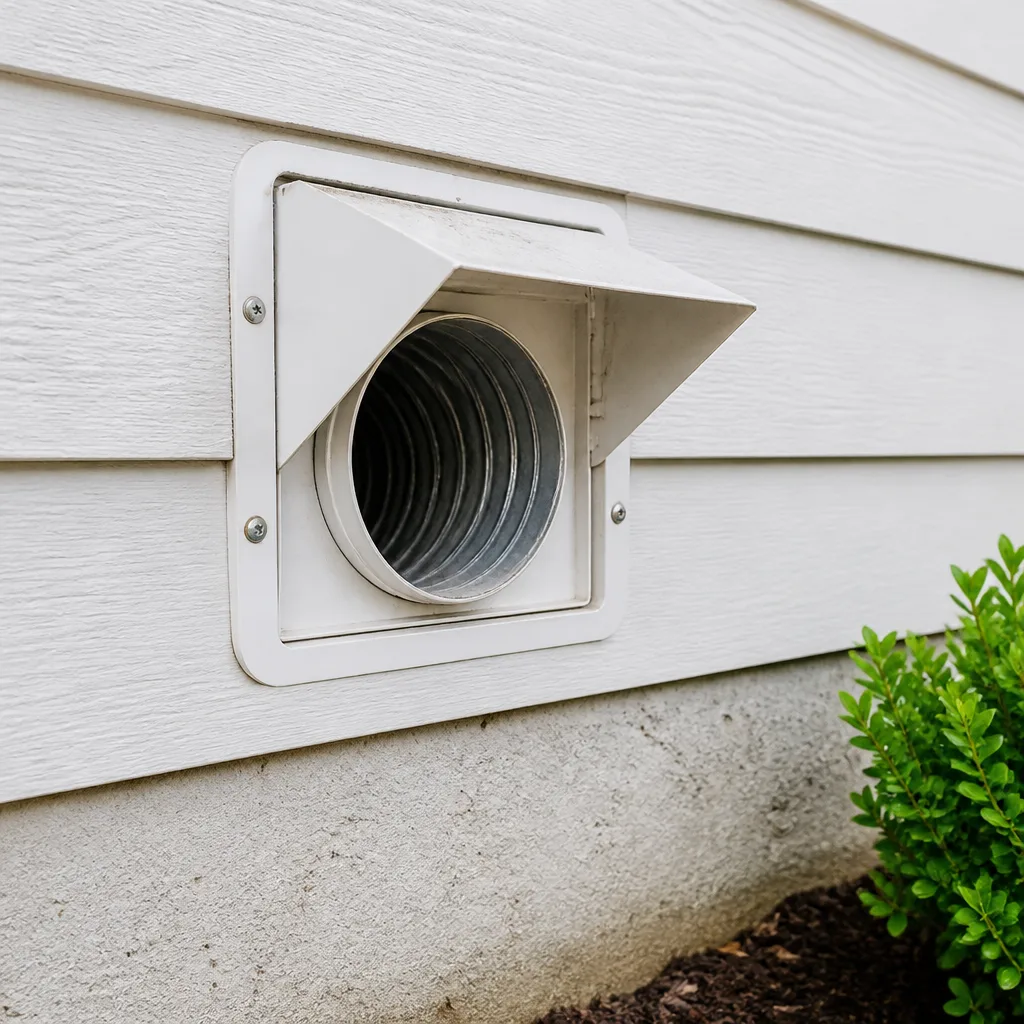
Dryer vent cleaning is a standalone service at Air Duct Cleaning Highlands Ranch, and it belongs on the same schedule as duct work. Lint accumulates along the vent and especially at elbows and the exterior termination. Restricted airflow means longer dry cycles, more heat build-up at the dryer, and more strain on the appliance. Cleaning the run restores airflow, cuts drying time, and closes one of the safety gaps most homeowners never check.
In a dry, high-wind climate like Highlands Ranch, exterior vent terminations also collect debris blown in from outside. A vent hung with a damper stuck open by debris is both a fire-safety and an air-infiltration issue. Worth checking once a year.
How to Verify the Work Was Actually Done
Homeowners who’ve had their ducts “cleaned” often have no idea whether the work was real. Here’s how to verify it, whether you’re standing in the room or comparing quotes.
- Ask for before-and-after photos of your own ducts. Not stock photos. Yours, with the run identified.
- Watch the containment filter. A proper cleaning loads the HEPA filter visibly. Ask to see what came out of the system.
- Confirm negative pressure was maintained throughout. A truck-mounted or portable unit should be running for the entire agitation and register step, not just at the start.
- Check access ports were sealed afterward. Every port cut for cleaning should have a proper cover or seal reinstalled.
- Look for the agitation brushes. If the technician never opens the case with the brush head or air whip, the ducts weren’t scrubbed.
- Review the post-cleaning camera run. A company confident in its work will show you the cleaned duct runs and point out what was addressed.
The same test applies when you compare quotes. A quote with a low headline price usually describes a register-only visit. A proper air duct cleaning Highlands Ranch job prices the whole system.
Common Mistakes to Avoid
- Booking a coupon-only visit. A door-hanger price that turns into a much larger invoice once the technician is inside is the industry’s bait-and-switch pattern. Insist on one flat price per system agreed in writing before work starts.
- Accepting a per-vent price. Duct cleaning isn’t priced per register. Per-vent pricing gives the company an incentive to count holes in the floor, not clean the system.
- Skipping agitation because the technician promised “deep vacuum.” Suction alone lifts loose debris. Bonded clay dust in Highlands Ranch ducts needs mechanical scrubbing, period.
- Cleaning without inspecting first. No camera, no quote. A company that prices a job blind can’t price it accurately or clean to a defined standard.
- Leaving leaks unsealed. Cleaning a leaking duct system and calling it done is a seasonal solution at best. Seal the leaks in the same visit.
- Ignoring the HVAC coil and blower. A matted evaporator coil keeps circulating the dust the ducts just gave up. Full-system cleaning reaches the equipment, not just the ducts.
- Forgetting the dryer vent entirely. The most overlooked duct in most Highlands Ranch homes is the one connected to the dryer. It’s a safety item, not a luxury.
See the difference
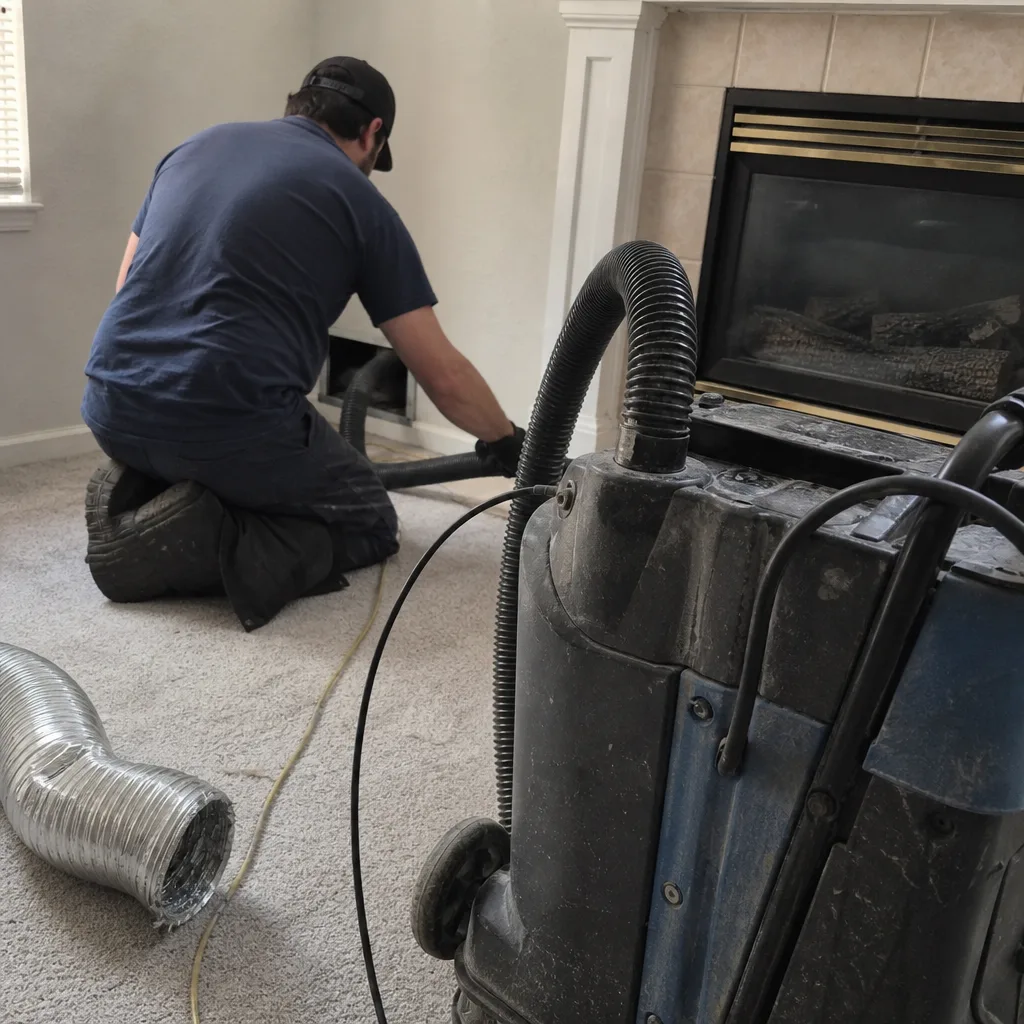 Before
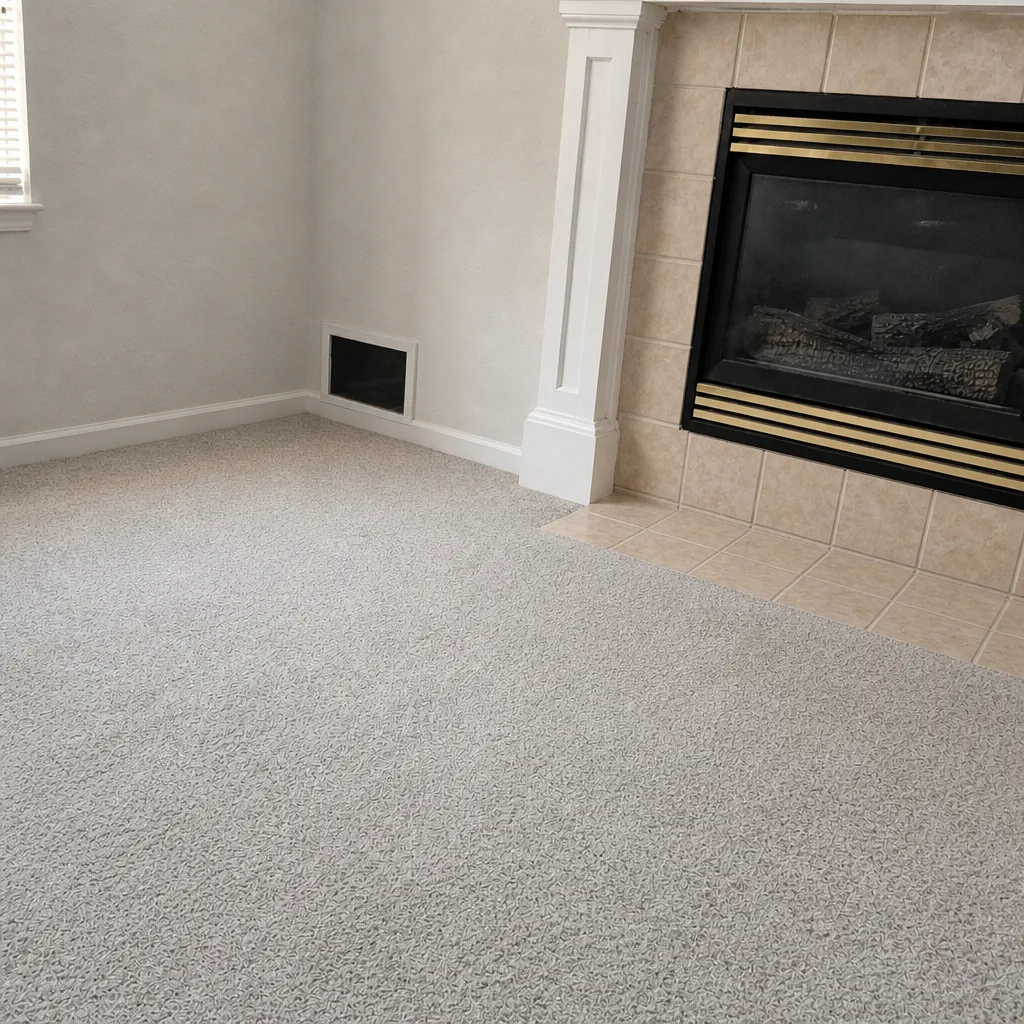 After
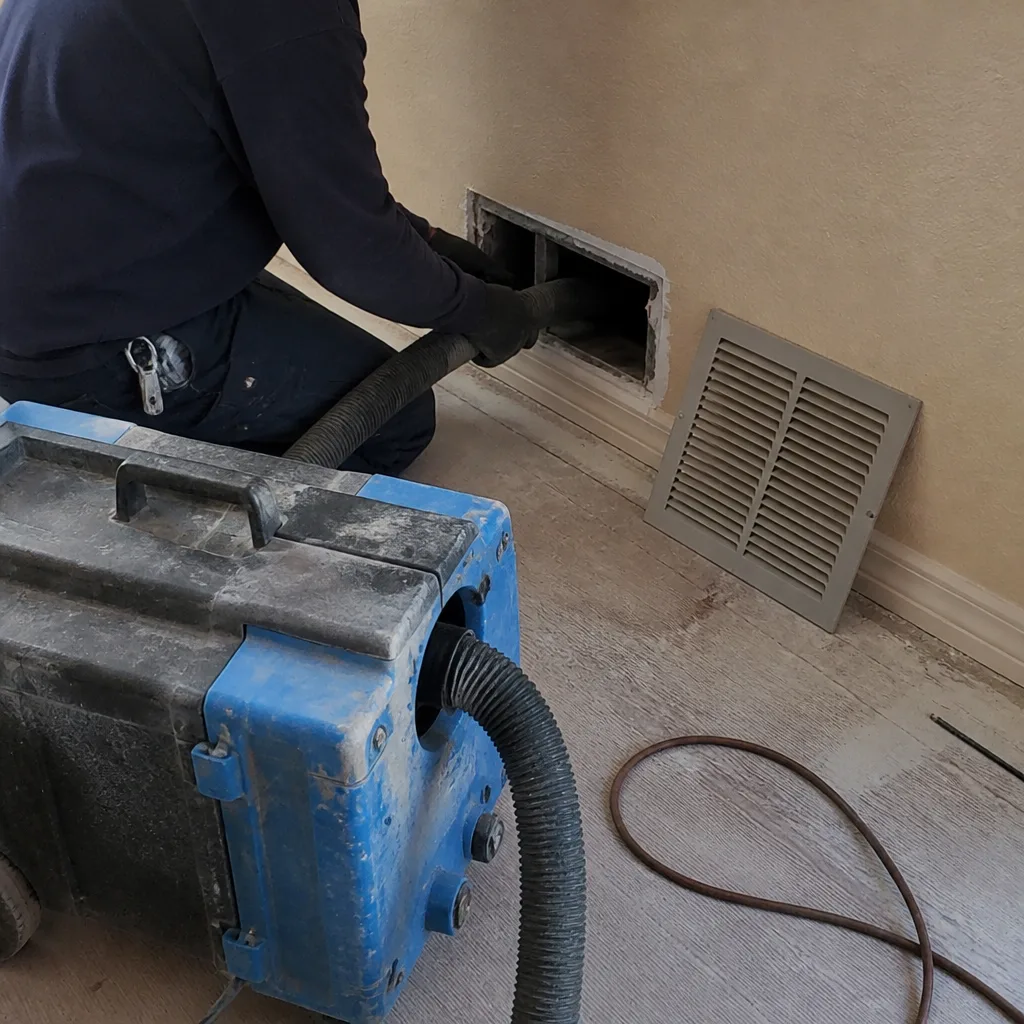 Before
 After
 Before
 After
When to Call a Professional
Some signs point to a duct cleaning being overdue. Visible dust streaks on supply and return grilles. A musty smell when the system starts. A recent renovation that left dust in the return plenum. An allergy or asthma diagnosis in the household. An HVAC system that hasn’t had duct service in several years. A dryer taking two cycles to finish a load. Dust settling on horizontal surfaces faster than usual. A home newly purchased where you don’t know the service history.
If any of those describe your home, a proper full-system assessment is the starting point. Air Duct Cleaning Highlands Ranch offers free estimates in Highlands Ranch – call (844) 443-4896. We answer 24/7. Fast dispatch from 7am to 7pm, Sunday through Friday. One flat price per system, agreed before work starts, with before-and-after photos so you can see what came out of your ducts.
Frequently Asked Questions
Air duct cleaning is priced per system by a written estimate, not per vent, and the price depends on square footage, number of HVAC systems, duct condition, and whether sealing or HVAC cleaning is included. Some quotes advertise a very low headline price, but those almost always cover registers only. The written estimate sets the final price, and estimates are free. Call (844) 443-4896 for an exact quote.
For most Highlands Ranch homes, every three to five years is a reasonable interval, with more frequent cleaning after a renovation, a new pet, an allergy diagnosis, or a home purchase where the service history is unknown. The clay-heavy soil and low humidity here load ducts faster than in wetter climates. Call (844) 443-4896 if you’re not sure where your system stands – the assessment is free.
Cheap quotes usually describe a smaller job. A low headline price often means registers get wiped and the vacuum runs briefly, with no mechanical agitation, no camera inspection, and no post-cleaning verification. Ask every company what equipment they use and whether agitation is included. If the answer is vague, the price reflects it. Call (844) 443-4896 and we’ll walk you through the full scope.
Ask for before-and-after photos of your own duct runs, ask to see what the containment filter collected, and confirm the technician performs a post-cleaning camera pass. Those three checks separate a real cleaning from a register wipe. Every cleaning we schedule includes all three. Call (844) 443-4896 to schedule an estimate.
Yes. At roughly 5,800 feet, air density is lower than at sea level, so the same vacuum motor moves less air mass than its rating suggests. That’s why contractor-grade equipment matters at this elevation. Consumer vacuums don’t hold sufficient negative pressure on a Highlands Ranch system, and the ducts don’t come clean. Call (844) 443-4896 with questions about your setup.
Yes. Duct repair and sealing is part of the same service visit as cleaning. Cleaning without sealing lets leaks pull outdoor air and clay dust back into the system, which undoes the benefit within a season. Fixing both in one visit saves a return trip. Call (844) 443-4896 for a combined quote.
The Bottom Line
A real air duct cleaning in Highlands Ranch comes down to three things: purpose-built equipment, a full scope that includes inspection, agitation, negative pressure, register cleaning, and verification, and a company that will show you the proof. Clay-heavy soil and 5,800 feet of elevation make suction margin critical and make dust loading a predictable maintenance item rather than a one-time fix. Skip the coil, the sealing, or the dryer vent and the value slips. Handle all of it in one relationship and the system runs clean longer. Free estimates, one flat price per system, and before-and-after photos of your own ducts – that’s the standard worth holding out for. Call (844) 443-4896. We answer 24/7. Fast dispatch from 7am to 7pm, Sunday through Friday.
Written by the team at Air Duct Cleaning Highlands Ranch.